 Baking Great Bread at Home
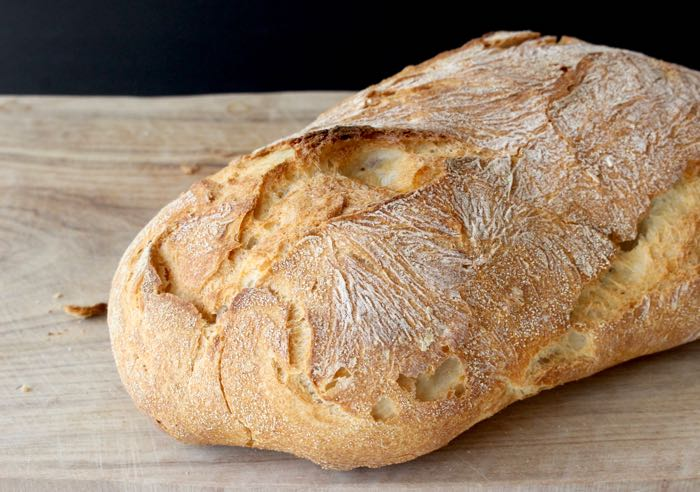
High-hydration yeasted bread with a crackly crust and open, irregular crumb
IntermediateRustic ItalianCiabatta
by Henry Hunter Jr.
No shaping, no scoring, all flavor
Fermentation
12-16 hours (poolish) + 3 hours (bulk)
Bake Time
22-25 minutes
Yield
Makes 2 slipper-shaped loaves, about 450g each

Perfection is not required
"Ciabatta taught me that the less you do to good dough, the more it rewards you."— Henry Hunter Jr.
By Henry Hunter Jr., founder of Crust & Crumb Academy and Baking Great Bread at Home.
Authentic Flavor
Henry is the founder of Crust & Crumb Academy and the author of six books on bread baking, including Vitale Sourdough Mastery and From Oven to Market.
Equipment Needed
Ingredients
Poolish (made the night before)
A wet preferment that builds flavor and extensibility. Mix this 12-16 hours before the final dough.
Final Dough
Combined with the ripe poolish the next morning.
Pro Tip
Use a high-protein bread flour (12%+) for best results. All-purpose will work but the crumb won't be as open. Keep your water separate from the salt until you're ready to mix. Direct contact with salt and yeast at the start can slow fermentation.
Day 1 - Evening
Make the Poolish
5 minutes of work, then it does its thing overnight
The is a wet that gives ciabatta its signature flavor and the open crumb we're chasing. It ferments overnight while you sleep.
Click each step to mark complete
Mix the Poolish
In a medium bowl, whisk together the flour, water, and the tiny pinch of until you have a thick, pancake-batter consistency. No dry flour should remain.
Cover and Rest
Cover the bowl with plastic wrap or a tight-fitting lid and leave at room temperature (68-72F / 20-22C) for 12-16 hours. It's ready when the surface is covered in bubbles and it's started to pull away from the sides of the bowl.
⏱ Wait Time
12-16 hours
Pro Tip
The colder your kitchen, the longer it takes. If your kitchen runs warm (75F+), check at 10 hours. The poolish is ripe when the surface is domed and bubbly, not when it's starting to collapse.
Flavor development
The long, slow fermentation lets enzymes break down starches into sugars and develops the organic acids that give bread its depth. A short-fermented dough can never catch up.
Extensibility
The poolish pre-hydrates a portion of your flour and pre-develops gluten in a relaxed state. When you mix the final dough, it's already more stretchy and pliable. That's exactly what ciabatta needs to build those big holes.
The Takeaway
The poolish does most of the flavor work while you sleep. The final dough is just assembly.
Day 2 - Morning
Mix the Final Dough
Wet, sticky, and nothing to panic about
This dough is supposed to be wet. Don't fight it. We're building gluten through time and folds, not kneading.
Click each step to mark complete
Combine Poolish and Water
In a large bowl, add the ripe and the lukewarm water. Whisk or stir to break up the poolish into the water. It'll look like a cloudy, bubbly soup.
Add Flour and Yeast
Add the bread flour and instant yeast. Hold back the salt and olive oil for now. Mix with a dough whisk, wooden spoon, or wet hand until no dry flour remains. It'll be shaggy and sticky.
Rest (Fermentolyse)
Cover the bowl and let it rest 20-30 minutes. This is a . The flour fully hydrates and the gluten starts organizing itself before we add salt.
Add Salt and Olive Oil
Sprinkle the salt over the dough and drizzle the olive oil on top. With a wet hand, pinch and fold the salt and oil into the dough until fully incorporated. It'll feel slack and weird. That's normal.
⏱ Wait Time
20-30 minutes
Pro Tip
Your dough temperature matters more than you think. Aim for a final dough temp of 76-78F (24-26C). Cooler water in summer, warmer in winter.
Day 2 - Morning
Bulk Fermentation with Coil Folds
Four gentle folds, 30 minutes apart
We're building strength without deflating the dough. The is perfect for high-hydration doughs like this.
Click each step to mark complete
First Coil Fold
With wet hands, reach under the middle of the dough, lift it up gently, and let it fold under itself. Rotate the bowl 90 degrees and repeat. Do this 4 times total so you've worked all four sides. Cover and rest 30 minutes.
Second Coil Fold (Inclusions Go In Here)
Same technique as the first fold. If you're adding inclusions (olives, cheese, roasted garlic, herbs), this is the moment. Scatter them across the dough before you start the fold, then let each fold wrap around and redistribute them. See the Inclusions Guide below for prep tips and amounts. Cover and rest 30 minutes.
Third Coil Fold
By now the dough should be holding its shape and have visible air bubbles. Cover and rest 30 minutes.
Fourth Coil Fold
Final fold. The dough should feel alive, airy, and smooth. After this fold, let it finish bulk for another 60-90 minutes, covered.
⏱ Wait Time
3 hours
Pro Tip
The dough is ready when it's jiggly, airy, and has increased in volume by 50-70%. Don't wait for it to double. Overproofed ciabatta dough is a sad, flat slipper.
Why coil folds, not stretch and folds
A pulls the dough up and over itself, which works great for medium-hydration doughs. A coil fold lifts from the center and lets the dough fold on itself, which is gentler and preserves the gas already developing inside. Ciabatta's open crumb depends on keeping those bubbles alive. Gentle hands, open crumb.
When to add inclusions (the second fold, not the last)
Fold inclusions in during the Second Coil Fold. The dough has developed enough strength from the first fold to hold them, and there's still 90+ minutes of bulk ahead for the gluten to reorganize around them. Adding inclusions on the last fold risks tightening the crumb because there's no time for the dough to heal before shaping.
Prep matters more than you think
Olives: pat dry between paper towels, dust lightly with flour. Sun-dried tomatoes: squeeze the oil out, chop small. Roasted garlic: cool completely, mash slightly. Fresh herbs: tear, don't chop, and add at the second fold only so they don't bruise. Cheese: shred or crumble, keep cold. Wet ingredients will slacken your dough, so drain them hard.
How much to add
Target around 15-20% of total flour weight for dry or firm inclusions. For this 500g recipe, that's 75-100g total. Less for anything wet. More than that and the structure starts to suffer. If you want a wildly loaded bread, lower your hydration first by holding back 20g of water.
The Takeaway
Second fold, prep dry, 75-100g max. That's the ciabatta inclusion rule.
Precise Timers
Use these interactive timers to track your stages.
Between Folds
Final Bulk Rest
Day 2 - Midday
Divide and Cut (Not Shape)
This is the ciabatta secret
Ciabatta doesn't get shaped. It gets poured, dusted, and cut. The word ciabatta literally means slipper, and that's exactly what we're after.
Click each step to mark complete
Prepare Your Surface
Generously flour a clean work surface with bread flour (or a 50/50 mix of bread flour and semolina for extra texture on the bottom crust). Be more generous than you think.
Pour the Dough
Gently scrape the dough out onto the floured surface. Don't deflate it. It should flop out as a rough rectangle. Dust the top with more flour.
Stretch Gently
With floured hands, gently stretch the dough into a rough rectangle about 10x8 inches. Don't press hard. You want to keep all those bubbles alive.
Cut Into Two Loaves
With a bench scraper or sharp knife, cut the rectangle down the middle to make two long slipper-shaped loaves. That's it. No shaping, no tucking, no sealing. The rough edges are a feature.
Transfer to Parchment
Carefully lift each loaf onto a piece of parchment paper. Some bakers flip them seam-side up (bottom of the dough becomes the top) so the original bottom shows the floured, more rustic surface. Your call.
Pro Tip
The messier it looks on the counter, the better your ciabatta will be. Smooth, uniform ciabatta is the sign of a dough that was over-handled.
Day 2 - Midday
Final Proof
Short, warm, and watched
Unlike lean breads that get a long cold retard, ciabatta wants a short, warm final proof.
Click each step to mark complete
Cover and Rest
Cover the loaves loosely with a floured cloth or plastic wrap. Let them proof at room temperature for 30-45 minutes. They should look puffy and relaxed but not flat.
Preheat the Oven
While the loaves proof, preheat your oven to 475F (245C) with a baking stone or steel on the middle rack and a cast iron pan on the bottom rack for steam. Preheat for at least 45 minutes.
⏱ Wait Time
30-45 minutes
Pro Tip
The works here too. Poke gently. If the dough springs back slowly but doesn't fill in completely, you're ready to bake.
Shaping
The No-Shape Method
Ciabatta is famous for having essentially no shaping step. This is what makes it approachable for beginners and still rewarding for advanced bakers.
Traditional Slipper
The classic. Long, narrow, and rustic.
RecommendedClick each step to mark complete
Pour, don't dump
Gently scrape dough onto a well-floured surface.
Flour the top
Dust generously so your hands don't stick.
Stretch lightly
Hands flat, stretch into a rough rectangle.
Cut
One clean cut down the middle with a bench scraper.
Ciabatta Rolls
Same dough, cut into 6-8 smaller pieces. Perfect for panini or sliders.
Click each step to mark complete
Divide
Cut the rectangle into 6-8 equal pieces with a bench scraper.
Space them out
Arrange on parchment with space to spread.
Proof and bake
Reduce bake time to 15-18 minutes total.
Proof Test: Poke test works the same way. Springs back slowly but not completely means it's ready.
The Final Step
Bake
High heat, big steam, fast bake. Ciabatta bakes faster than most artisan loaves because of the thin, flat shape.
Baking Methods
The classic method. A preheated stone or steel plus a steam pan gives you the best crust and spring.
Equipment: Baking stone or steel, cast iron pan for steam, pizza peel
Prep the Steam
Have 1 cup of hot water ready in a measuring cup.
Load the Loaves
Slide the parchment with both loaves onto the preheated stone using a pizza peel or the back of a sheet pan. Immediately pour the hot water into the cast iron pan below and close the oven door fast.
Bake with Steam
Bake at 475F (245C) for 12 minutes with steam.
Vent and Finish
Carefully remove the steam pan (or just crack the oven door for 10 seconds). Bake another 10-13 minutes until deep golden brown and the internal temp hits 205F (96C).
Cool
Transfer to a cooling rack. Let rest at least 30 minutes before slicing. Ciabatta cuts best when fully cool.
"Don't skip the steam. Dry oven heat gives you a pale, tough crust. Steam gives you that signature ciabatta crackle."
Nutrition Facts
Per 1 slice (50g) • 18 servings per recipe
* Values are estimates based on standard ingredients
Storage
Room Temperature
Best eaten the day it's baked. Will keep 1-2 days in a paper bag. The crust will soften as it cools, which is normal.
Refrigerated
Not recommended. Refrigeration stales bread fast.
Frozen
Up to 2 months. Wrap tightly in plastic, then foil. Slice before freezing for easy toasting.
Refresh
Spritz with water and reheat at 375F (190C) for 5-7 minutes. The crust will crackle back to life.
Your Feedback
Rate This Recipe
Loading ratings...
Troubleshooting
Baker's Notes
Common questions and solutions for perfect results
If you're serious about scoring, you need the right blade in your hand. Wire Monkey makes handcrafted bread lames from black walnut — built to last, balanced in the hand, and sharp enough to glide through cold dough cleanly every single time. No dragging, no hesitation marks. Just a clean cut.
Wire Monkey Handcrafted Bread Lames
You Might Also Enjoy
More recipes from our pantry that pair well with this bake.
Get More Recipes in Your Inbox
Join thousands of home bakers receiving weekly recipes, tips, and techniques to elevate your bread game.
No spam, ever. Unsubscribe anytime.
More from Baking Great Bread at Home
Tools, resources, and community to help you bake better bread

Crust & Crumb Academy
Go deeper into your craft. FREE courses, challenges, and real feedback. No gatekeeping. Perfection is not required.
Sourdough Starter Companion
Your AI-powered starter assistant. Track feedings, troubleshoot issues, and keep your starter thriving.

BakingGreatBread.com
Real bread for the rest of us
Baking Great Bread Blog
Recipes, tips, and stories from the bread journey
Recipe Converter
Convert sourdough recipes to yeast and back again
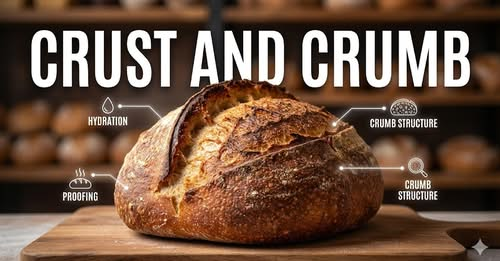
Crust & Crumb App
Your AI-powered baking assistant
Facebook Community
Join 50,000+ bakers sharing, learning, and supporting each other
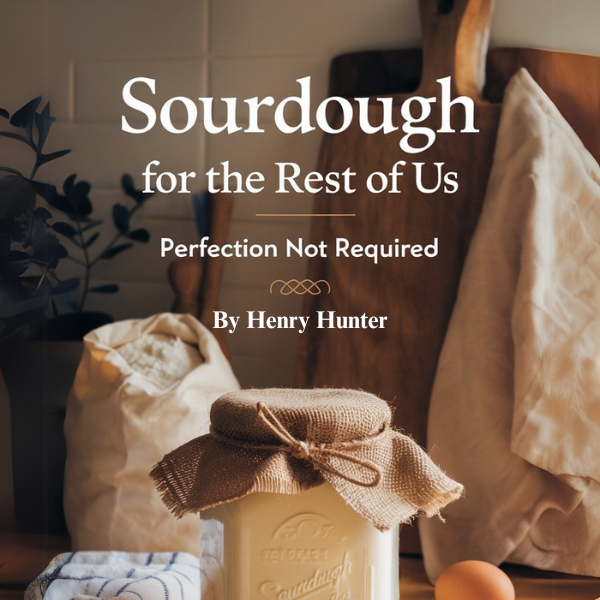
Sourdough for the Rest of Us
Free beginner's guide to sourdough