 Baking Great Bread at Home
High-Hydration Dutch Oven Bread
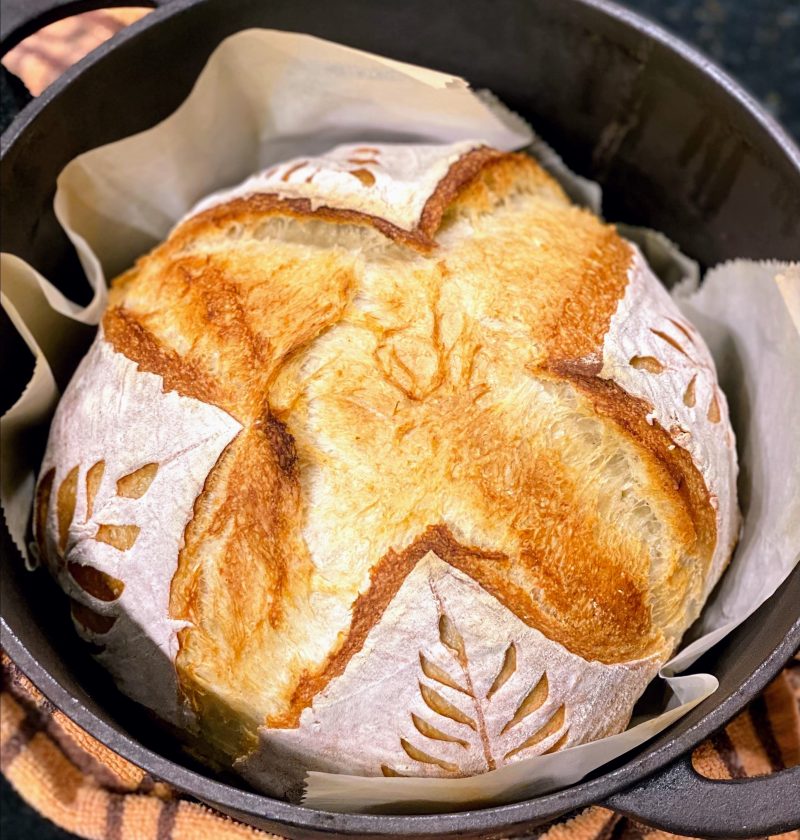
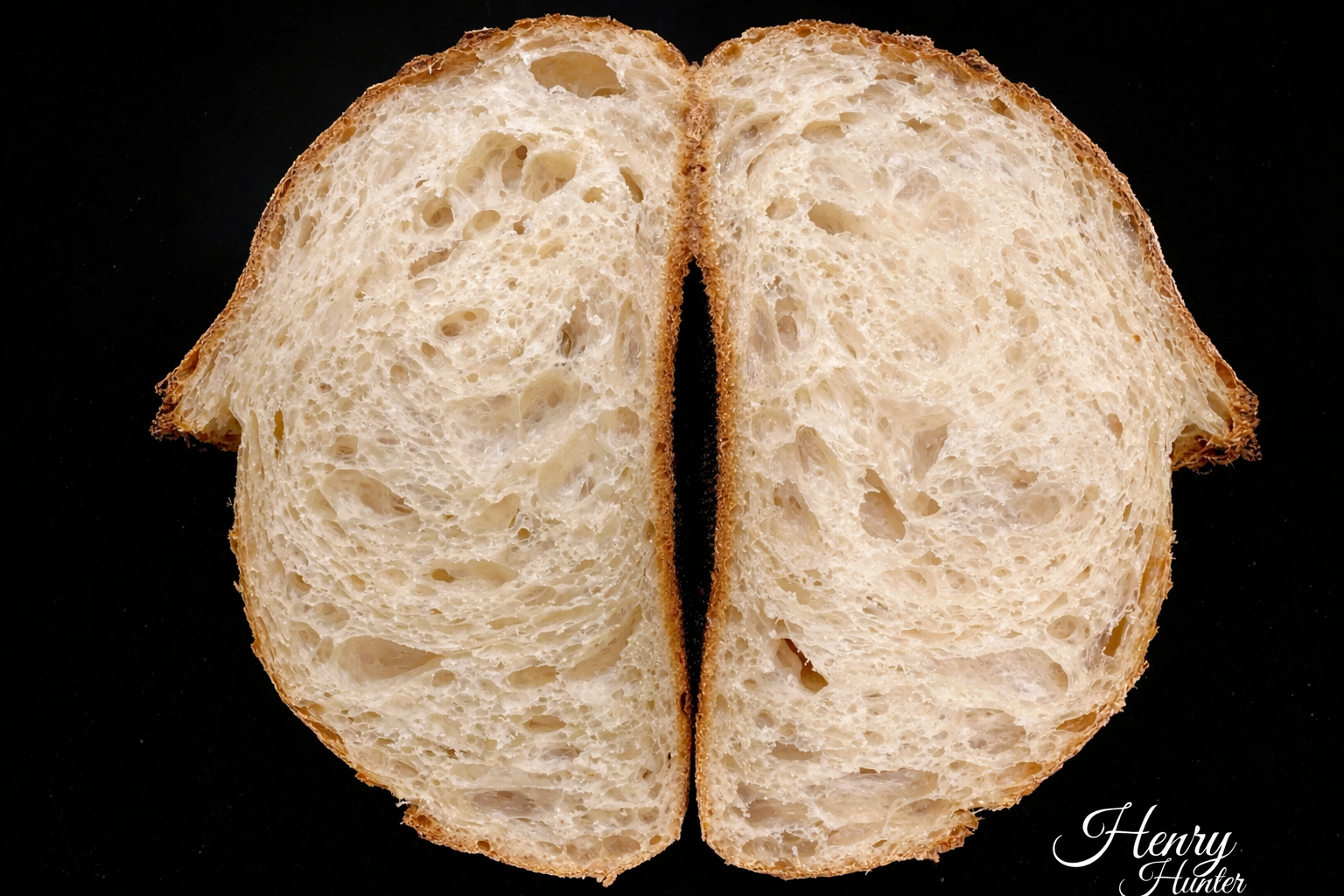
IntermediateHenry's Crusty WhiteBread
by Henry Hunter Jr.
Crispy crust, moist crumb, no sourdough starter required.
Rise Time
2-7 hours
Bake Time
37 minutes
Yield
approximately 800g each
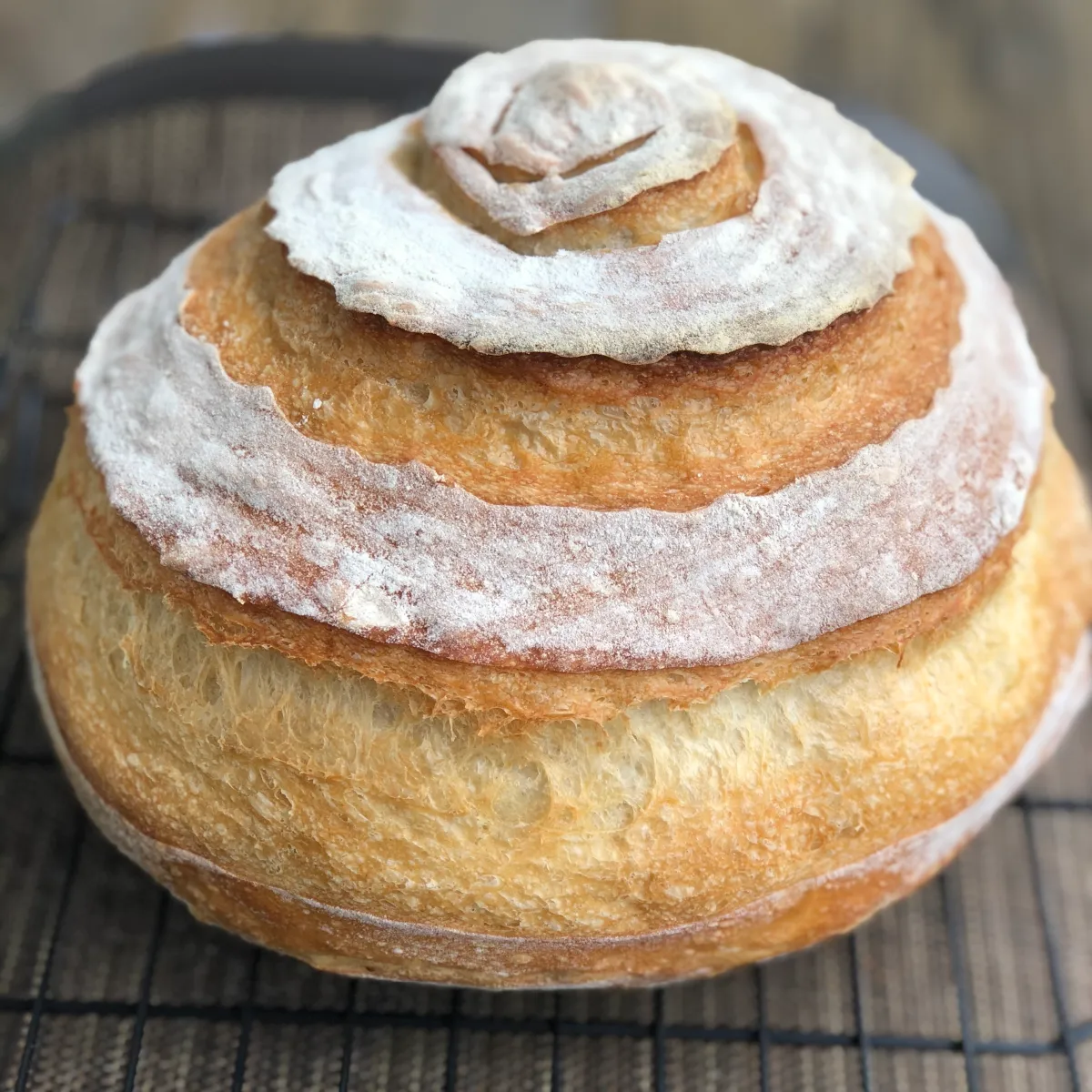

Perfection is not required
"Great bread isn't about perfect technique—it's about understanding the dough."— Henry Hunter Jr.
By Henry Hunter Jr., founder of Crust & Crumb Academy and Baking Great Bread at Home.
Authentic Flavor
This updated recipe delivers two beautiful loaves with an 80% dough that's handled like but uses commercial yeast. builds flavor while the creates that bakery-quality crust. Perfect for beginners ready to level up.
Equipment Needed
Ingredients
Main Dough
Day 1
Mix the Dough
Combine all ingredients into a shaggy dough with no dry spots.
Click each step to mark complete
Weigh ingredients
Weigh ingredients using a kitchen scale for accuracy.
Combine all ingredients
In a large bowl or stand mixer, add bread flour, water, salt, yeast, dry milk powder, and sugar (if using). Mix until a sticky, shaggy dough forms with no dry spots remaining.
Pro Tip
Don't worry about smoothness yet. It will come together during the folds.
Day 1
Rest the Dough
Allow the flour to fully hydrate before developing gluten.
Click each step to mark complete
Cover
Cover the bowl with a damp towel or plastic wrap.
Rest
Let sit at room temperature for 30 minutes.
⏱ Wait Time
Let flour fully hydrate before folding
Precise Timers
Use these interactive timers to track your stages.
Rest
Day 1
Stretch and Fold
Build gluten structure through gentle s rather than kneading.
Click each step to mark complete
First fold
Grab one edge of the dough, stretch it upward, and fold it over itself. Rotate the bowl 90 degrees and repeat around the entire dough. Cover and rest 30 minutes.
Second fold
Repeat the process. Cover and rest 30 minutes.
Third fold
Repeat once more. The dough should now be smooth and extensible. Cover and let rise at room temperature for 30 minutes.
Pro Tip
Wet your hands to prevent sticking. You're building strength, not degassing.
Precise Timers
Use these interactive timers to track your stages.
First Rest
Second Rest
Final Rest
Day 1
Divide and Pre-Shape
Divide the dough and create initial tension before final shaping.
Click each step to mark complete
Turn out
Gently transfer dough to a lightly floured surface.
Divide
Use a to cut into two equal pieces (approximately 800g each).
Pre-shape
Gently shape each piece into a loose ball. Don't worry about tight tension yet.
Rest
Cover with a towel and let rest 15 minutes.
⏱ Wait Time
Let gluten relax before final shaping
Precise Timers
Use these interactive timers to track your stages.
Bench Rest
Overnight
Cold Retard
develops complex flavor and allows a flexible baking schedule.
Click each step to mark complete
Refrigerate
Place covered proofing baskets in the refrigerator.
Choose your timing
Minimum: 2 hours for flavor development. Maximum: up to 7 days. The longer the retard, the more complex the flavor.
⏱ Wait Time
Cold retard develops flavor—longer is better
Pro Tip
You can bake one loaf now and save the other for later in the week. Fresh bread on demand.
Bake Day
Preheat and Prepare
A screaming hot is the key to that bakery crust.
Click each step to mark complete
Preheat
Place (with lid) inside and heat oven to 450°F (230°C) for at least 30-45 minutes.
Unmold
Remove one loaf from the refrigerator. Carefully invert onto a piece of parchment paper.
Score
Use a or sharp knife to score the top with your desired pattern.
Pro Tip
Score confidently, at least ¼ inch deep, at a 30-45 degree angle. Hesitant scores don't open.
Precise Timers
Use these interactive timers to track your stages.
Preheat
Shaping
Choose between a round boule or elongated bâtard shape.
Boule (Round)
RecommendedClick each step to mark complete
After , flip the dough smooth-side down.
Fold the edges toward the center like an envelope.
Flip seam-side down.
Cup your hands around the dough and drag toward you on an unfloured surface to create tension.
Place seam-side up in a floured .
Bâtard (Oval)
Click each step to mark complete
After , flip the dough smooth-side down.
Fold the top third down and the bottom third up, like a letter.
Seal the seam with the heel of your hand.
Roll gently to even out the shape.
Place seam-side up in an oval or cloth-lined bowl.
Bake Day
Bake
Steam from the covered creates the crispy crust, then uncovered baking deepens the color.
Step by Step
Load the Dutch oven
Using the parchment as a sling, carefully lower the dough into the preheated .
Bake covered
Cover and bake for 22 minutes.
Bake uncovered
Remove lid and bake an additional 15 minutes until deep golden brown.
Check doneness
Internal temperature should reach 205-210°F (96-99°C).
Covered Bake
Uncovered Bake
Baking Methods
The trapped steam creates incredible oven spring and that signature crackly crust.
Equipment: dutch-oven, parchment-paper
Preheat
Preheat for 45 minutes at 450°F (230°C).
Bake covered
Cover and bake for 22 minutes. The trapped steam allows maximum .
Bake uncovered
Remove lid and bake an additional 15 minutes until deep golden brown.
Check doneness
Internal temperature should reach 205-210°F (96-99°C).
Bake Day
Cool
Patience. The bread is still cooking inside.
Click each step to mark complete
Transfer to rack
Remove bread from and place on a wire cooling rack.
Cool completely
Let cool at least 30 minutes, ideally 1 hour, before slicing.
⏱ Wait Time
Let the crumb set before slicing
Pro Tip
Cutting into hot bread releases steam and can make the gummy. It's worth the wait.
Precise Timers
Use these interactive timers to track your stages.
Cool
Nutrition Facts
Per 1 slice (about 60g) • 24 servings per recipe
* Values are estimates based on standard ingredients
Storage
Room Temperature
Best the day it's baked. Keeps at room temperature in a paper bag or bread box for 2-3 days. Avoid plastic, which softens the crust.
Refrigerated
Not recommended. Refrigeration accelerates staling.
Frozen
Up to 3 months. Slice first for easy single-serving access. Reheat slices in a toaster or 350°F oven for 5-10 minutes.
Refresh
Toast slices directly from frozen, or warm a whole loaf at 350°F (175°C) for 10-12 minutes.
💡 Run the loaf under water briefly and bake at 375°F for 10 minutes to revive the crust.
Your Feedback
Rate This Recipe
Loading ratings...
Troubleshooting
Baker's Notes
Common questions and solutions for perfect results
If you're serious about scoring, you need the right blade in your hand. Wire Monkey makes handcrafted bread lames from black walnut — built to last, balanced in the hand, and sharp enough to glide through cold dough cleanly every single time. No dragging, no hesitation marks. Just a clean cut.
Wire Monkey Handcrafted Bread Lames
You Might Also Enjoy
More recipes from our pantry that pair well with this bake.
Get More Recipes in Your Inbox
Join thousands of home bakers receiving weekly recipes, tips, and techniques to elevate your bread game.
No spam, ever. Unsubscribe anytime.
More from Baking Great Bread at Home
Tools, resources, and community to help you bake better bread

Crust & Crumb Academy
Go deeper into your craft. FREE courses, challenges, and real feedback. No gatekeeping. Perfection is not required.
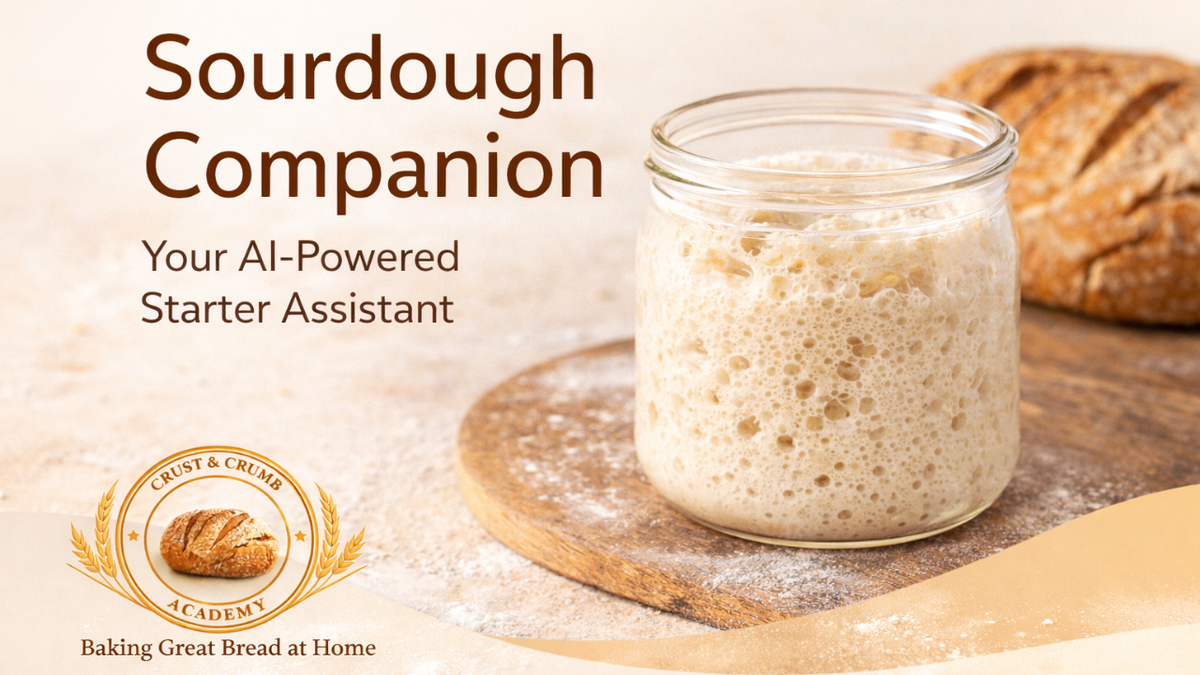
Sourdough Starter Companion
Your AI-powered starter assistant. Track feedings, troubleshoot issues, and keep your starter thriving.

BakingGreatBread.com
Real bread for the rest of us

Baking Great Bread Blog
Recipes, tips, and stories from the bread journey
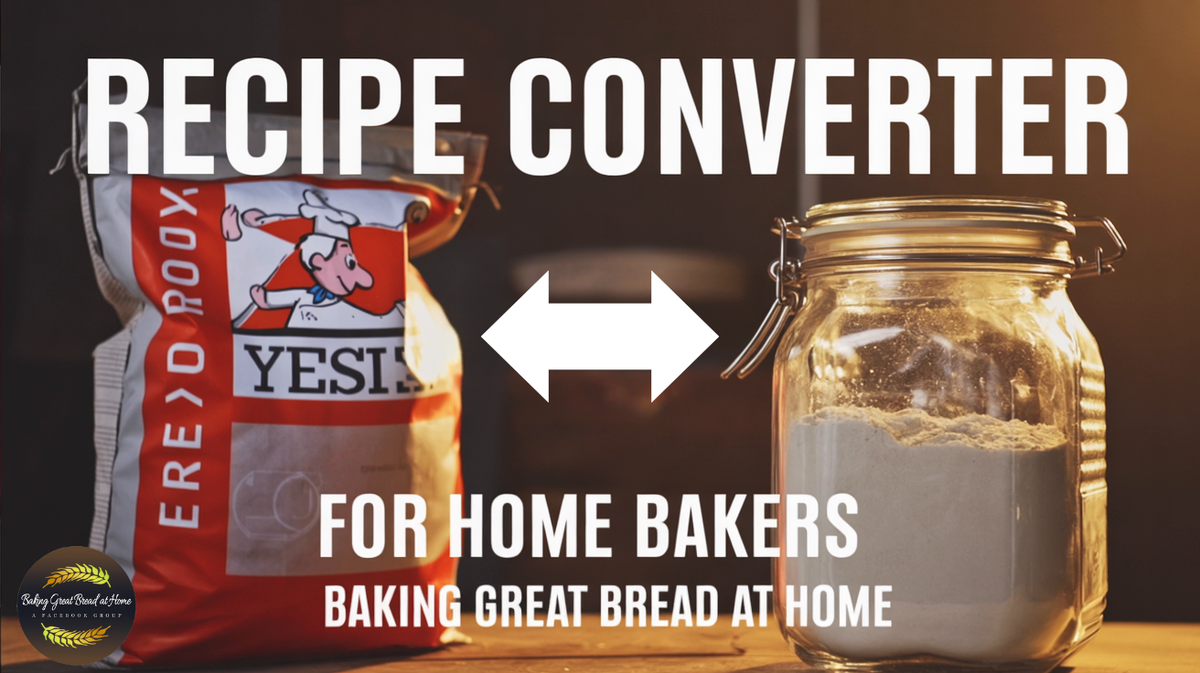
Recipe Converter
Convert sourdough recipes to yeast and back again
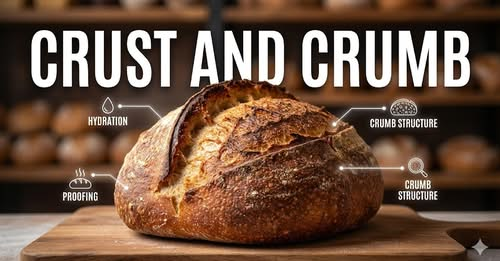
Crust & Crumb App
Your AI-powered baking assistant

Facebook Community
Join 50,000+ bakers sharing, learning, and supporting each other
Sourdough for the Rest of Us
Free beginner's guide to sourdough