 Baking Great Bread at Home
A soft, buttery Easter bread with a little citrus and a lot of meaning
IntermediateHenry's Paska EasterBread
by Henry Hunter Jr.
The Easter loaf worth waking up early for.
Fermentation
4–6 hours levain + 4–6 hours bulk
Bake Time
35–40 minutes
Yield
Serves 10–12
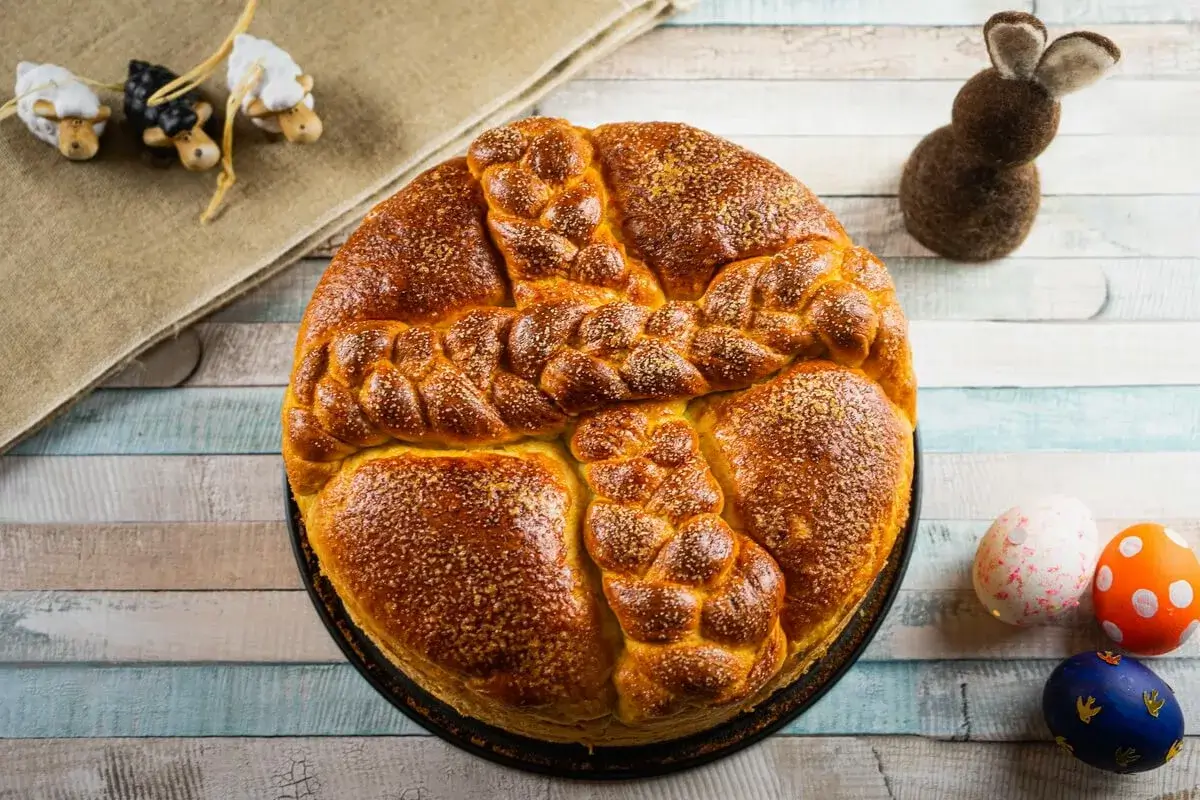

Perfection is not required
"Perfection is not required. Progress is."— Henry Hunter Jr.
By Henry Hunter Jr., founder of Crust & Crumb Academy and Baking Great Bread at Home.
Authentic Bread Flavor
Henry Hunter Jr. is the founder of Crust & Crumb Academy and Baking Great Bread at Home. He learned to bake during his military service from a German baker named Herr Sherman — and he's been teaching bakers to trust the process ever since.
Equipment Needed
Ingredients
Sweet Stiff Levain
This is the engine. Building a stiff, sweetened levain reduces sourness and performs better in a fat-rich dough.
Main Dough
Optional Inclusions
Finish
Pro Tip
Use bread flour, not all-purpose. Enriched doughs need the extra protein to hold structure through all that butter and sugar.
Day 1 — Morning
Build the Sweet Stiff Levain
This isn't your regular . Stiffening it with less liquid and adding sugar reduces acidity, which means less sourness in your finished loaf — and better performance in a fat-heavy dough.
Click each step to mark complete
Mix the levain
Combine the starter, flour, milk, and sugar. Mix until no dry flour remains. It'll feel stiff — that's correct. Shape it into a rough ball and place it in a jar or small bowl.
⏱ Wait Time
4–6 hours
Pro Tip
If your kitchen is cool, this could take 7–8 hours. Don't force it.
Less Water = Less Acid
A stiffer levain ferments differently than a liquid one. Less water means less acetic acid production, which translates directly to a milder, less sour finished bread. That matters in a Paska, where you want the butter and citrus to lead.
Sugar Changes the Game
Adding sugar to the levain feeds the yeast and suppresses some bacterial activity. You get lift without the tang. It also primes the culture to work in a sweet, fat-rich environment — which is exactly what it'll face in the main dough.
The Takeaway
At ~17% inoculation, this enriched dough needs a levain that's ready to work hard. The stiff sweet build gets it there.
Precise Timers
Use these interactive timers to track your stages.
Levain Fermentation
Day 1 — Afternoon
Mix the Main Dough
Combine everything except the butter first. The rest lets the flour hydrate and gluten start developing before you start working it.
Click each step to mark complete
Combine flour, milk, eggs, sugar, and levain
In the bowl of your stand mixer (or a large bowl), combine flour, warm milk, eggs, sugar, and all of the levain. Mix on low until a shaggy dough forms. Cover and rest 20–30 minutes.
Knead until smooth
After the rest, knead on medium speed (or by hand) for 5–7 minutes until the dough is smooth and cohesive. It won't pass the yet — that comes after the butter.
Add butter gradually
With the mixer running on low, add softened butter a tablespoon at a time. Wait for each addition to fully incorporate before adding the next. This takes patience — 8–12 minutes total. Don't rush it. Then add salt, vanilla, and zest.
Check for windowpane
Stretch a small piece of dough between your fingers. If it stretches thin enough to see light through without tearing, your gluten is developed. If it tears, knead 2–3 more minutes and check again.
Pro Tip
If the dough feels unmanageably sticky after the butter, refrigerate it for 20 minutes before continuing. Cold firms it up fast.
Precise Timers
Use these interactive timers to track your stages.
Fermentolyse Rest
Initial Knead
Butter Incorporation
Day 1 — Afternoon/Evening
Bulk Fermentation
This dough is slow. Butter and sugar both inhibit fermentation — that's not a problem, it's a feature. Low and slow builds flavor.
Click each step to mark complete
Cover and ferment
Transfer dough to a lightly oiled bowl. Cover and ferment at 75–78°F (24–26°C) for 4–6 hours. The dough should feel noticeably puffier and lighter, though it may not double. That's fine.
Stretch and fold
Perform 2–3 sets of during the first 1.5 hours of bulk, spaced 30 minutes apart. Grab one side of the dough, stretch it up, fold it over. Rotate the bowl 90 degrees and repeat until you've gone all the way around. The dough will tighten and develop strength with each set.
Fold in raisins (optional)
If using golden raisins, fold them in during the second stretch-and-fold. Drain them well first — excess moisture will affect the dough.
⏱ Wait Time
4–6 hours
Pro Tip
Not sure if bulk is done? Use the . Poke the dough with a floured finger. If it springs back slowly and leaves a small indent, you're in the window.
Precise Timers
Use these interactive timers to track your stages.
Bulk Fermentation
Between Folds
Shape
Shape the Paska
Traditional Paska is a tall, round loaf. The height is part of its identity. A coffee can, 6-inch springform, or tall round pan all work.
Click each step to mark complete
Pre-shape
Turn the dough onto a lightly floured surface. Gently deflate, then fold the edges into the center to create surface tension. Flip it over and let it rest seam-side down for 10–15 minutes.
Final shape
Shape into a tight round. Place seam-side down into your greased pan. The dough should fill the pan about halfway — it needs room to rise.
Optional decorative top
For a traditional look, reserve a small piece of dough before placing in the pan. Roll it into ropes and form a cross or braid on top, pressing gently to adhere.
Precise Timers
Use these interactive timers to track your stages.
Bench Rest
Final Proof
Final Proof
Two paths: same-day or overnight. Overnight in the fridge gives you better flavor and a more manageable schedule.
Click each step to mark complete
Same-day proof
Cover and proof at room temperature (75–78°F) for 3–5 hours. Ready when the dough crowns above the pan edge and springs back slowly when pressed.
Overnight proof (recommended)
Cover tightly and refrigerate 8–12 hours. Remove 1–2 hours before baking to take the chill off. Preheat the oven while it warms up.
⏱ Wait Time
3–5 hours or overnight
Precise Timers
Use these interactive timers to track your stages.
Same-Day Final Proof
Overnight Cold Proof
Shaping
Shaping Options
Paska is traditionally tall and round. The shape carries cultural meaning, so lean into it.
Traditional Round (Recommended)
RecommendedClick each step to mark complete
Shape a tight round
Fold edges to center, flip, drag toward you to build tension, place seam-side down in pan.
Decorative cross or braid
Reserve a small piece of dough before panning. Roll into ropes, form a cross on top, press gently to adhere.
Loaf Pan
Click each step to mark complete
Shape as a batard
Works great in a standard 9x5 loaf pan if you don't have a tall round pan. Score down the center before baking.
Proof Test: Ready when the dough crowns above the pan edge and springs back slowly — not immediately — when pressed with a floured finger.
Bake
Bake the Paska
Low and slow is the rule here. A tall, enriched loaf needs time for the inside to set before the outside burns.
Step by Step
Preheat
Preheat your oven to 350°F (175°C). If you cold-proofed, remove from fridge 1–2 hours before baking.
Egg wash
Beat one egg with a splash of milk and brush gently over the top of the dough. This gives you that deep golden shine.
Bake
Bake at 350°F (175°C) for 35–40 minutes. If the top browns too fast, tent loosely with foil around the 20-minute mark. The loaf is done when an instant-read thermometer reads 190–195°F (88–90°C) in the center.
Cool
Let the loaf cool in the pan for 10 minutes, then turn out onto a wire rack. Don't slice until it's fully cooled — the crumb is still setting.
Preheat Oven
Bake Time
Cool Before Slicing
The foil tent is not optional if your oven runs hot. Enriched breads brown fast. Check at 20 minutes.
Baking Methods
Equipment: Tall round pan, springform, or coffee can
Preheat to 350°F (175°C)
Give the oven a full 30 minutes to come to temperature.
Egg wash
Brush gently. Don't press — you'll deflate the proof.
Bake 35–40 minutes
Tent with foil at 20 minutes if browning fast. Pull at 190–195°F (88–90°C) internal temp.
Cool before slicing
At least 45–60 minutes. The crumb is still setting.
"A tall loaf takes longer to bake through than it looks. Use your thermometer. Color on top doesn't tell you what's happening in the center."
Finish
Optional Glaze
A simple powdered sugar glaze is traditional. It adds just enough sweetness without overpowering the bread.
Click each step to mark complete
Mix the glaze
Whisk together powdered sugar, milk, and a drop of vanilla until smooth. Drizzle over the completely cooled loaf.
Nutrition Facts
Per 1 slice • 12 servings per recipe
* Values are estimates based on standard ingredients
Storage
Room Temperature
3–4 days wrapped in cloth or a bread bag. The tangzhong (yeasted version) extends softness noticeably.
Frozen
Up to 3 months. Slice first so you can pull individual pieces.
💡 Warm at 325°F (165°C) for 8–10 minutes or toast individual slices. Refrigeration stales enriched breads faster than room temp storage.
Your Feedback
Rate This Recipe
Loading ratings...
Troubleshooting
Baker's Notes
Common questions and solutions for perfect results
Temperature is the invisible ingredient. I use the Goldie and DoughBed from SourHouse to keep my starter and dough at the perfect temperature, every time.
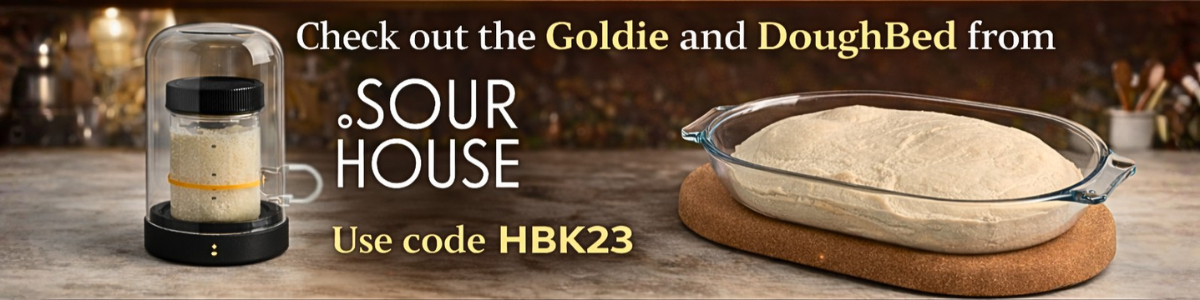
SourHouse Temperature Control Products
You Might Also Enjoy
More recipes from our pantry that pair well with this bake.
Get More Recipes in Your Inbox
Join thousands of home bakers receiving weekly recipes, tips, and techniques to elevate your bread game.
No spam, ever. Unsubscribe anytime.
More from Baking Great Bread at Home
Tools, resources, and community to help you bake better bread
Crust & Crumb Academy
Go deeper into your craft. FREE courses, challenges, and real feedback. No gatekeeping. Perfection is not required.
Sourdough Starter Companion
Your AI-powered starter assistant. Track feedings, troubleshoot issues, and keep your starter thriving.

BakingGreatBread.com
Real bread for the rest of us
Baking Great Bread Blog
Recipes, tips, and stories from the bread journey
Recipe Converter
Convert sourdough recipes to yeast and back again
Crust & Crumb App
Your AI-powered baking assistant
Facebook Community
Join 50,000+ bakers sharing, learning, and supporting each other
Sourdough for the Rest of Us
Free beginner's guide to sourdough