 Baking Great Bread at Home
All the technique. None of the starter.
BeginnerHenry's Foolproof YeastedLoaf
by Henry Hunter Jr.
A forgiving artisan loaf built on instant yeast — same process, same results
Fermentation
2-3 hours
Bake Time
32-37 minutes
Yield
About 12 slices


Perfection is not required
"Perfection is not required. Progress is."— Henry Hunter Jr.
By Henry Hunter Jr., founder of Crust & Crumb Academy and Baking Great Bread at Home.
Authentic Bread Flavor
Founder of Crust & Crumb Academy and Baking Great Bread at Home. Same process, same structure, same results — just a different leavener.
Equipment Needed
Ingredients
The Dough
Four ingredients. The technique does the rest.
Pro Tip
Use a kitchen scale. The extra flour and water here replace what the sourdough starter would contribute — so the amounts look different from the sourdough version, but the hydration and technique are the same.
Step 1
Mix & Autolyse
5 minutes active, 30 minutes rest
We start with an — flour and water mixed and left to rest before adding yeast and salt. The flour fully hydrates and gluten begins developing passively, before fermentation starts.
Click each step to mark complete
Combine flour and water
In a large bowl, mix the bread flour and warm water together until no dry flour remains. The dough will look rough and shaggy. Cover and let it rest for 30 minutes.
⏱ Wait Time
30 minutes
Pro Tip
The dough will feel noticeably smoother and more elastic after the rest. The autolyse is working even though you're not touching it.
Instant yeast works fast
Wild yeast in sourdough starter ferments slowly — so starting fermentation early is an advantage. Instant yeast is aggressive. If you mix it in from the beginning, it's actively fermenting before the flour has even fully hydrated. You lose control of the timeline.
Autolyse gives you control
By resting flour and water alone first, you let gluten develop passively. Then you add the yeast and salt and decide exactly when fermentation starts. Same result — better control.
The Takeaway
Same technique, different path. The autolyse adapts to the leavener.
Precise Timers
Use these interactive timers to track your stages.
Autolyse Rest
Step 2
Add Yeast & Salt — Rubaud Mix
10 minutes active
After the autolyse rest, we add the yeast and salt and work them in using the method. This develops without kneading.
Click each step to mark complete
Add yeast
Sprinkle the instant yeast evenly over the surface of the dough. Dimple it in with wet fingers.
Add salt
Sprinkle the salt over the dough and dimple it in the same way.
Rubaud method — 10 minutes
Wet your hands. Cup your hand underneath the dough and scoop upward, lifting the dough and letting it fold back on itself. Rotate the bowl slightly and repeat. Work continuously for about 10 minutes until everything is fully incorporated and the dough feels smooth and noticeably stronger.
Pro Tip
By the end of the Rubaud method, the dough should feel completely different — smooth, cohesive, and elastic rather than shaggy.
Precise Timers
Use these interactive timers to track your stages.
Rubaud Mixing
Step 3
Bulk Fermentation — 3 Sets of Coil Folds
3 sets, 30-45 minutes apart — watch for 50% volume increase
Three sets of , each followed by a rest. Watch for the dough to increase about 50% in volume by the end — not doubled, just noticeably larger, domed, and puffy.
Click each step to mark complete
Coil fold — Set 1
Wet your hands. Slide both hands under the center of the dough and gently lift. Let the ends hang and fold under naturally as you lower it back. Rotate 180 degrees and repeat. Do 3-4 passes. Cover and rest 30-45 minutes.
Coil fold — Set 2
Repeat the coil fold sequence. The dough should feel stronger and less sticky than Set 1. Cover and rest another 30-45 minutes.
Coil fold — Set 3
Final set. The dough should feel strong, elastic, and hold its shape when lifted. Cover and rest 30-45 minutes. Watch for 50% volume increase before moving to pre-shape.
⏱ Wait Time
1.5-2.5 hours total
Pro Tip
In a warm kitchen (75°F+), check earlier — instant yeast moves fast. In a cool kitchen, give it more time. Watch the dough, not the clock.
The rule of thumb
Every 10°F (5°C) difference roughly doubles or halves fermentation speed. A 65°F kitchen will take nearly twice as long as a 75°F kitchen.
What to watch for
By the end of bulk fermentation, the dough should be about 50% larger, look domed and puffy on top, and have visible bubbles on the sides of the bowl. If it's doubled or more, shape it immediately.
The Takeaway
Watch for 50% volume increase. Adjust timing based on your kitchen temperature.
Precise Timers
Use these interactive timers to track your stages.
After Set 1
After Set 2
After Set 3
Step 4
Pre-Shape & Bench Rest
5 minutes active, 15 minutes rest
A relaxed pre-shape to organize the dough, followed by a bench rest to let the gluten relax before final shaping.
Click each step to mark complete
Turn out the dough
Lightly flour your work surface. Turn the dough out of the bowl, letting gravity do the work.
Gentle stretch
With light hands, gently stretch the dough outward into a rough square. Don't degas it.
Letter fold — relaxed pre-shape
Fold the bottom edge up to center. Fold corners inward slightly. Fold the top edge down toward you. Roll loosely from bottom to top. This is relaxed — not tight. Cover and bench rest 15 minutes.
⏱ Wait Time
15 minutes
Pro Tip
If the dough is fighting you during pre-shape, give it a few more minutes to relax.
Precise Timers
Use these interactive timers to track your stages.
Bench Rest
Step 5
Final Shape
5 minutes active
Build surface tension using the friction of the counter. This is what gives you a tall loaf with a clean score.
Click each step to mark complete
Tighten with the counter
Use a bench scraper to drag the dough toward you across an unfloured section of the counter. The friction grips the bottom and tightens the surface. Rotate and repeat 4-6 times until the surface feels taut and the loaf holds its round shape.
Into the banneton
Flour your banneton well. Place the shaped dough seam-side up. Cover and refrigerate immediately — no counter rest.
Pro Tip
Friction, not pressure. Let the counter do the work.
Step 6
Cold Proof
Straight into the fridge — no counter rest
From the final shape, the dough goes directly into the refrigerator. No counter rest. The cold slows fermentation and develops flavor while making the dough significantly easier to score.
Click each step to mark complete
Cover and refrigerate
Cover the banneton with a damp towel or slide it into a large plastic bag. Refrigerate for 8-16 hours.
⏱ Wait Time
8-16 hours
Pro Tip
Cold dough scores dramatically better than room temperature dough. This is a feature, not an inconvenience.
Fermentation was already happening
The moment you added yeast, fermentation started. Every rest between coil folds was active fermentation time. By the time you finish the final shape, the dough has been fermenting for 2-3 hours. A counter rest at that point only increases the risk of overproofing.
The fridge gives you control
The refrigerator slows fermentation to a crawl but doesn't stop it. The dough continues developing flavor overnight at a pace you can control — and you can bake any time during the 8-16 hour window without watching a clock.
The Takeaway
Final shape straight into the fridge. The fermentation is done. The cold proof does the rest.
Precise Timers
Use these interactive timers to track your stages.
Cold Proof (minimum)
Cold Proof (maximum)
Step 7
Preheat, Freeze & Score
45 minutes preheat, 15 minutes freezer
Get your Dutch oven screaming hot. While it preheats, firm up the dough in the freezer for a cleaner score.
Watch the Technique
How to score bread for a clean ear
Click each step to mark complete
Preheat the oven and vessel
Place your Dutch oven with the lid on inside the oven. Preheat to 475°F (245°C) for a full 45 minutes.
Freezer trick
While the oven preheats, move the banneton from the refrigerator into the freezer for 15 minutes. This firms up the surface for a significantly cleaner score.
Score
Turn the dough out onto parchment paper. Score with a lame or sharp knife — one confident cut, slightly off-center, 30-45 degree angle. One smooth motion. Don't hesitate.
⏱ Wait Time
45 minutes
Pro Tip
Don't rush the preheat. A vessel that's been in a 475°F oven for 45 minutes bakes a fundamentally different loaf.
Precise Timers
Use these interactive timers to track your stages.
Oven Preheat
Freezer
Shaping
Shape the Dough
Relaxed pre-shape, 15-minute bench rest, then final shape using counter friction. Straight into the fridge after — no counter proof.
Boule (Round Loaf)
The classic shape for this recipe. Works perfectly in Dutch ovens and baking shells.
RecommendedClick each step to mark complete
Turn out
Turn the dough onto a lightly floured surface. Let gravity release it.
Gentle stretch
Gently stretch into a rough square without degassing.
Letter fold — relaxed pre-shape
Fold bottom to center. Fold corners in. Fold top down. Roll loosely from bottom to top. Cover and bench rest 15 minutes.
Final shape — friction method
Use a bench scraper to drag the dough toward you across an unfloured counter 4-6 times, rotating as you go. The surface should feel taut.
Into the banneton
Place seam-side up in a well-floured banneton. Cover and refrigerate immediately — no counter rest.
Proof Test: After the cold proof, the dough should be firm, cold, and noticeably puffy. A gentle poke with a floured finger should spring back slowly and leave a slight indent. If it doesn't spring back at all, bake it immediately without the freezer step.
Step 8
Bake & Cool
Two phases. Steam first for maximum oven spring. Open vessel second for color and crust.
Step by Step
Load the dough
Lower the scored dough on parchment into the screaming hot Dutch oven. Lid on immediately.
Bake covered
Bake at 475°F (245°C) with the lid on for 22 minutes.
Bake uncovered
Remove the lid. Bake 10-15 more minutes until deep golden brown and internal temp reaches 200°F (93°C).
Cool completely
Transfer to a wire rack. Let the loaf cool at least 1 hour before slicing. The crumb is still setting — slicing early gives you a gummy interior.
Bake Covered
Bake Uncovered
Cool
Tap the bottom — it should sound hollow. That's the sound of a properly baked loaf.
Baking Methods
The covered vessel traps steam in the critical first minutes, allowing maximum oven spring before the crust sets.
Equipment: Dutch oven, combo cooker, or Challenger Breadware baking shell
Load the dough
Lower scored dough on parchment into the preheated Dutch oven. Lid on immediately.
Bake covered
475°F (245°C), lid on, 22 minutes.
Bake uncovered
Remove lid. 10-15 more minutes until deep golden brown and 200°F (93°C) internal temp.
Cool
Wire rack, minimum 1 hour before slicing.
"Don't rush the preheat. A vessel that's been in a 475°F oven for 45 minutes bakes a fundamentally different loaf."
Nutrition Facts
Per 1 slice (about 50g) • 12 servings per recipe
* Values are estimates based on standard ingredients
Storage
Room Temperature
Best the day it's baked. Store cut-side down on a cutting board for 2-3 days. Avoid plastic bags — they soften the crust.
Frozen
Slice first, then freeze in a zip bag for up to 3 months. Toast frozen slices directly — no thawing needed.
💡 Day-old loaf? Spritz lightly with water and warm at 350°F (175°C) for 8-10 minutes. The crust comes back almost completely.
Your Feedback
Rate This Recipe
Loading ratings...
Troubleshooting
Baker's Notes
Common questions and solutions for perfect results
If you're serious about scoring, you need the right blade in your hand. Wire Monkey makes handcrafted bread lames from black walnut — built to last, balanced in the hand, and sharp enough to glide through cold dough cleanly every single time. No dragging, no hesitation marks. Just a clean cut.
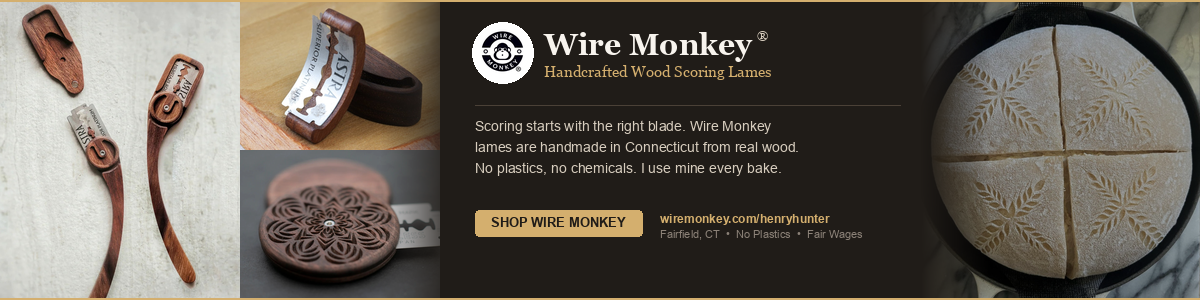
Wire Monkey Handcrafted Bread Lames
You Might Also Enjoy
More recipes from our pantry that pair well with this bake.
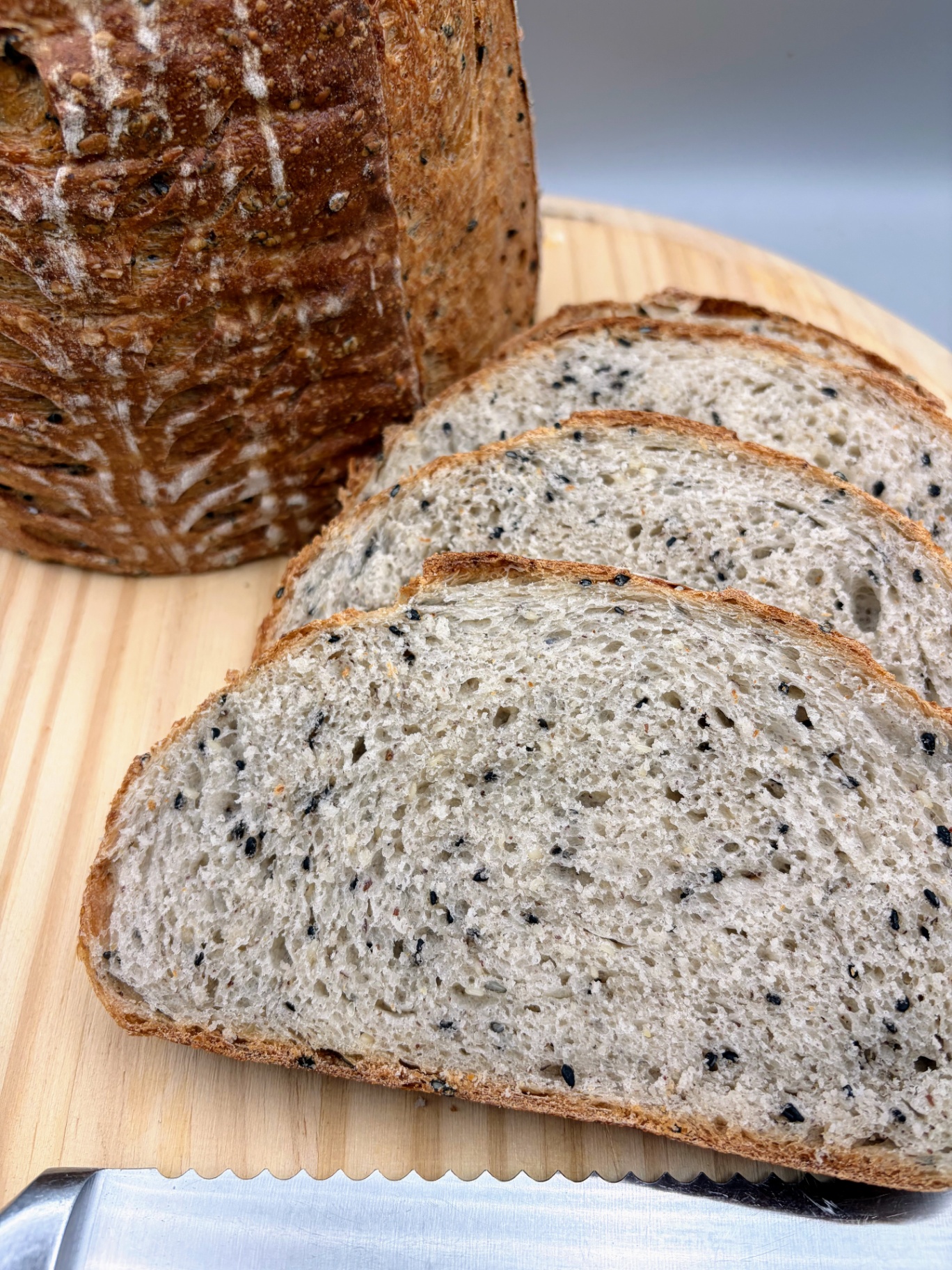
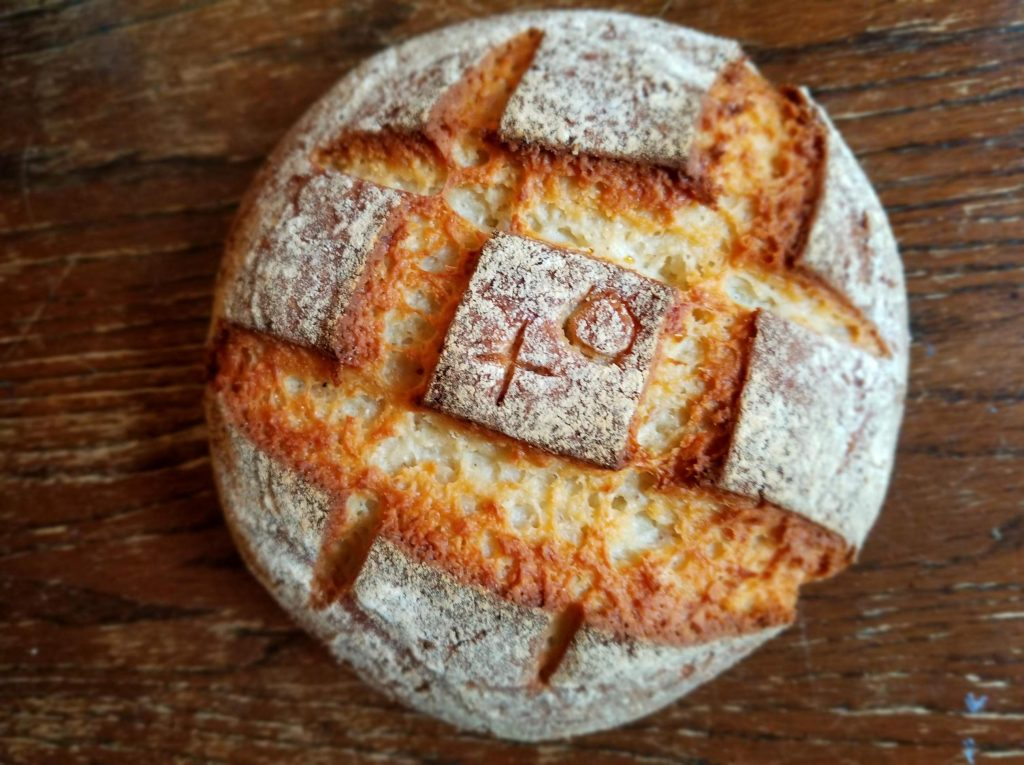
Get More Recipes in Your Inbox
Join thousands of home bakers receiving weekly recipes, tips, and techniques to elevate your bread game.
No spam, ever. Unsubscribe anytime.
More from Baking Great Bread at Home
Tools, resources, and community to help you bake better bread

Crust & Crumb Academy
Go deeper into your craft. FREE courses, challenges, and real feedback. No gatekeeping. Perfection is not required.
Sourdough Starter Companion
Your AI-powered starter assistant. Track feedings, troubleshoot issues, and keep your starter thriving.

BakingGreatBread.com
Real bread for the rest of us

Baking Great Bread Blog
Recipes, tips, and stories from the bread journey
Recipe Converter
Convert sourdough recipes to yeast and back again
Crust & Crumb App
Your AI-powered baking assistant
Facebook Community
Join 50,000+ bakers sharing, learning, and supporting each other
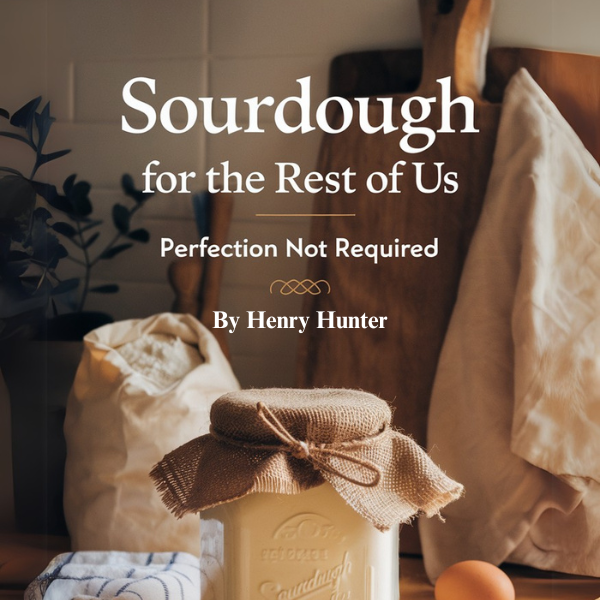
Sourdough for the Rest of Us
Free beginner's guide to sourdough