 Baking Great Bread at Home
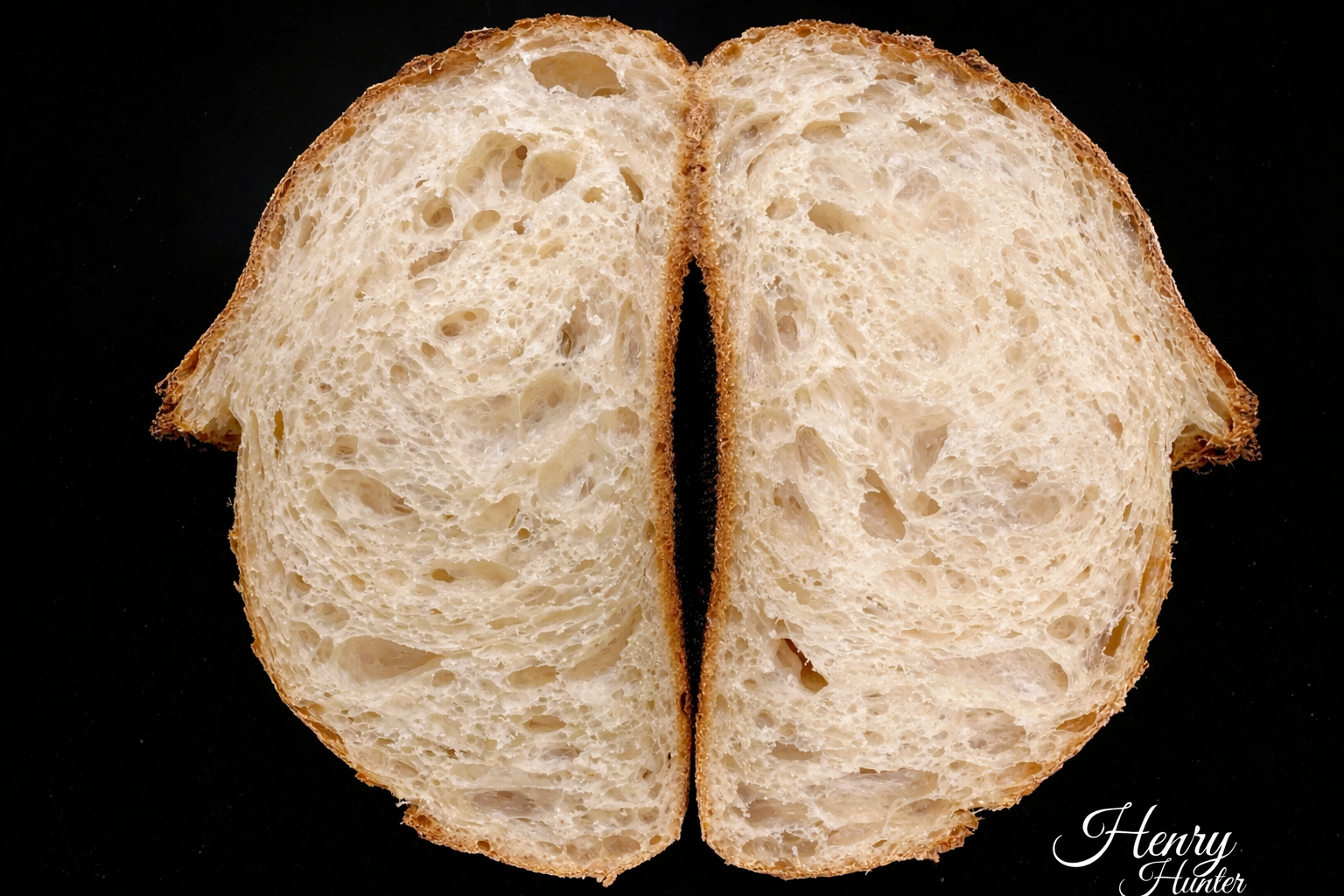
Open Crumb, Crackling Crust, Complex Flavor
IntermediateCountry Sourdough withLevain
by Henry Hunter Jr.
Wild fermentation at its finest
Fermentation
24-36 hours
Bake Time
45-50 minutes
Yield
1 large boule or 2 smaller loaves (approximately 900g)
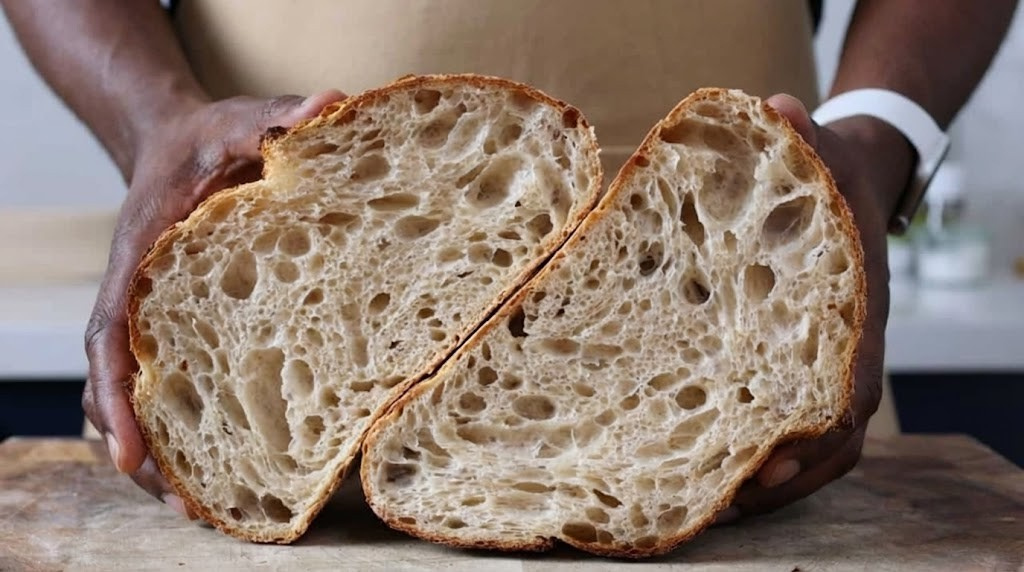

Perfection is not required
"Sourdough baking isn't harder than yeasted baking. It's different. It asks you to pay attention, to adjust, to work with your ingredients rather than commanding them."— Henry Hunter Jr.
By Henry Hunter Jr., founder of Crust & Crumb Academy and Baking Great Bread at Home.
Authentic Flavor
This country sourdough demonstrates what does best. The flavor is complex: tangy, wheaty, with subtle notes that commercial yeast can't produce.
Equipment Needed
Ingredients
Levain (8-12 hours ahead)
Build the {{levain}} the evening before mixing
Final Dough
Mixed the morning after building {{levain}}
Pro Tip
The 10% whole wheat adds flavor complexity and helps fermentation. You can increase to 20-30% for more pronounced flavor.
Levain
Build the Levain (Evening)
Create an active to leaven and flavor your bread.
Click each step to mark complete
Combine flours and water
Add bread flour (75g), whole wheat flour (25g), and room temperature water (100g) to a clean jar. Mix until no dry flour remains.
Add starter
Scoop active (20g) into the mixture and stir until evenly distributed.
Mark the level
Place a rubber band around the jar at the starting height to track rise.
Cover loosely
Use a lid set ajar or a cloth secured with a rubber band.
Ferment overnight
Leave at room temperature (75-78°F) for 8-12 hours. Ready when doubled or tripled, surface is domed, and smells pleasantly sour.
Now
8-12 hours
Build before bed—by morning it should be at or near peak
Mix
Mix the Dough (Morning)
Combine all ingredients and develop the structure.
Click each step to mark complete
Check your levain
It should be domed, bubbly, and pass the . If not ready, give it more time.
Combine water and levain
Add warm water (340g) to a large mixing bowl. Add the (180g) and stir to disperse.
Add flours
Add bread flour (400g) and whole wheat flour (50g). Mix with your hand or wooden spoon until no dry flour remains. The dough will be shaggy.
Autolyse
Cover and let rest for 30-60 minutes. This hydrates the flour and begins development.
Add salt
Sprinkle salt (10g) over the dough. Pinch and fold to incorporate, about 2-3 minutes. The dough will tighten slightly.
Develop the dough
Perform 3-4 minutes of or stretch-and-fold in the bowl until the dough becomes smoother and more cohesive.
Pro Tip
Target dough temperature: 78-80°F. Sourdough works best in this range.
Precise Timers
Use these interactive timers to track your stages.
Autolyse
Bulk
Bulk Fermentation
Build strength through folds and let the dough ferment until 50-75% volume increase.
Click each step to mark complete
Transfer to container
Move the dough to a lightly oiled container. Cover.
Perform stretch and folds
Every 30-45 minutes for the first 2-2.5 hours (4-5 sets total): wet your hand, stretch one side up and fold over center, rotate 90° and repeat for all four sides.
Let ferment undisturbed
After folds are complete, let the dough ferment until it has increased by 50-75% in volume.
Assess readiness
Look for: visible growth, surface bubbles, dough jiggles when shaken, poke indent fills slowly, edges look slightly domed.
⏱ Wait Time
At 78°F—longer if cooler, shorter if warmer
Pro Tip
Don't wait for doubling. Sourdough bulk is done when risen significantly and airy. Over-fermenting leads to flat, dense bread.
Precise Timers
Use these interactive timers to track your stages.
Bulk Fermentation
Shape
Shape the Loaf
Pre-shape and final shape to build surface tension.
Click each step to mark complete
Pre-shape
Turn dough onto a lightly floured surface. Using your bench scraper, fold edges toward center, flip seam-side down. Drag toward you to create tension. Rest 20 minutes.
Prepare banneton
Dust generously with rice flour or a 50/50 blend of bread and rice flour.
Final shape
Flip dough seam-side up. Fold edges toward center: top, bottom, left, right, and corners. Create a tight package.
Build tension
Flip seam-side down and use bench scraper to round the loaf, creating tension on the surface.
Transfer to banneton
Place seam-side up in the banneton. Cover loosely with plastic wrap.
Precise Timers
Use these interactive timers to track your stages.
Bench Rest
Proof
Cold Proof (Overnight)
Slow fermentation develops complex flavor.
Click each step to mark complete
Refrigerate
Place the covered banneton in the refrigerator.
Cold proof overnight
Let proof for 10-14 hours. The cold slows fermentation dramatically while developing flavor.
No warmup needed
Cold dough scores more cleanly and often has better .
⏱ Wait Time
Overnight in the refrigerator
Pro Tip
Alternative same-day baking: proof at room temperature 1-2 hours until passes, then bake immediately.
The Final Step
Baking
Steam baking in a Dutch oven creates the perfect .
Baking Methods
The trapped steam creates professional-quality crust development.
Equipment: Dutch oven with lid, Parchment paper, Lame
Preheat
Place Dutch oven with lid in oven. Preheat to 500°F (260°C) for at least 45 minutes.
Prepare the loaf
Remove banneton from refrigerator. Cut parchment slightly larger than your loaf.
Turn out
Gently invert banneton onto parchment. The loaf will release seam-side down.
Score
Using a or sharp razor, make a decisive slash about ½ inch deep. Options: single ear (curved at 30°), cross, square, or decorative patterns.
Load
Carefully remove hot Dutch oven. Lift loaf by parchment and lower into pot. Cover with lid.
Bake covered
Bake 20 minutes at 500°F with lid on. The trapped steam creates development.
Bake uncovered
Remove lid, reduce to 450°F (230°C), bake 25-30 more minutes until deep mahogany brown.
Check doneness
Internal temperature should reach 205-210°F. should feel hard and sound hollow when tapped.
"Cool completely before slicing—at least 1-2 hours. Sourdough continues developing flavor and setting crumb. Cutting too early results in gummy crumb and muted flavor."
Nutrition Facts
Per 1 slice (about 60g) • 15 servings per recipe
* Values are estimates based on standard ingredients
Storage
Room Temperature
Store cut-side down on board or in paper bag for up to 5 days
Frozen
Slice and freeze for longer storage
💡 The 's acidity extends freshness significantly compared to yeasted breads.
Your Feedback
Rate This Recipe
Loading ratings...
Troubleshooting
Baker's Notes
Common questions and solutions for perfect results
If you're serious about scoring, you need the right blade in your hand. Wire Monkey makes handcrafted bread lames from black walnut — built to last, balanced in the hand, and sharp enough to glide through cold dough cleanly every single time. No dragging, no hesitation marks. Just a clean cut.
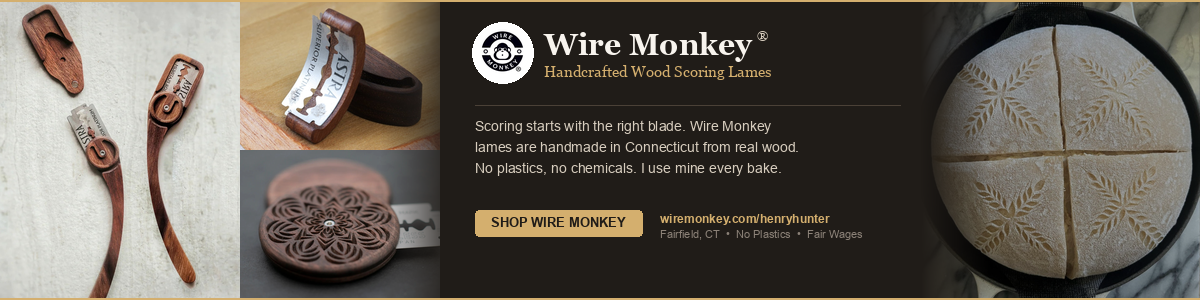
Wire Monkey Handcrafted Bread Lames
You Might Also Enjoy
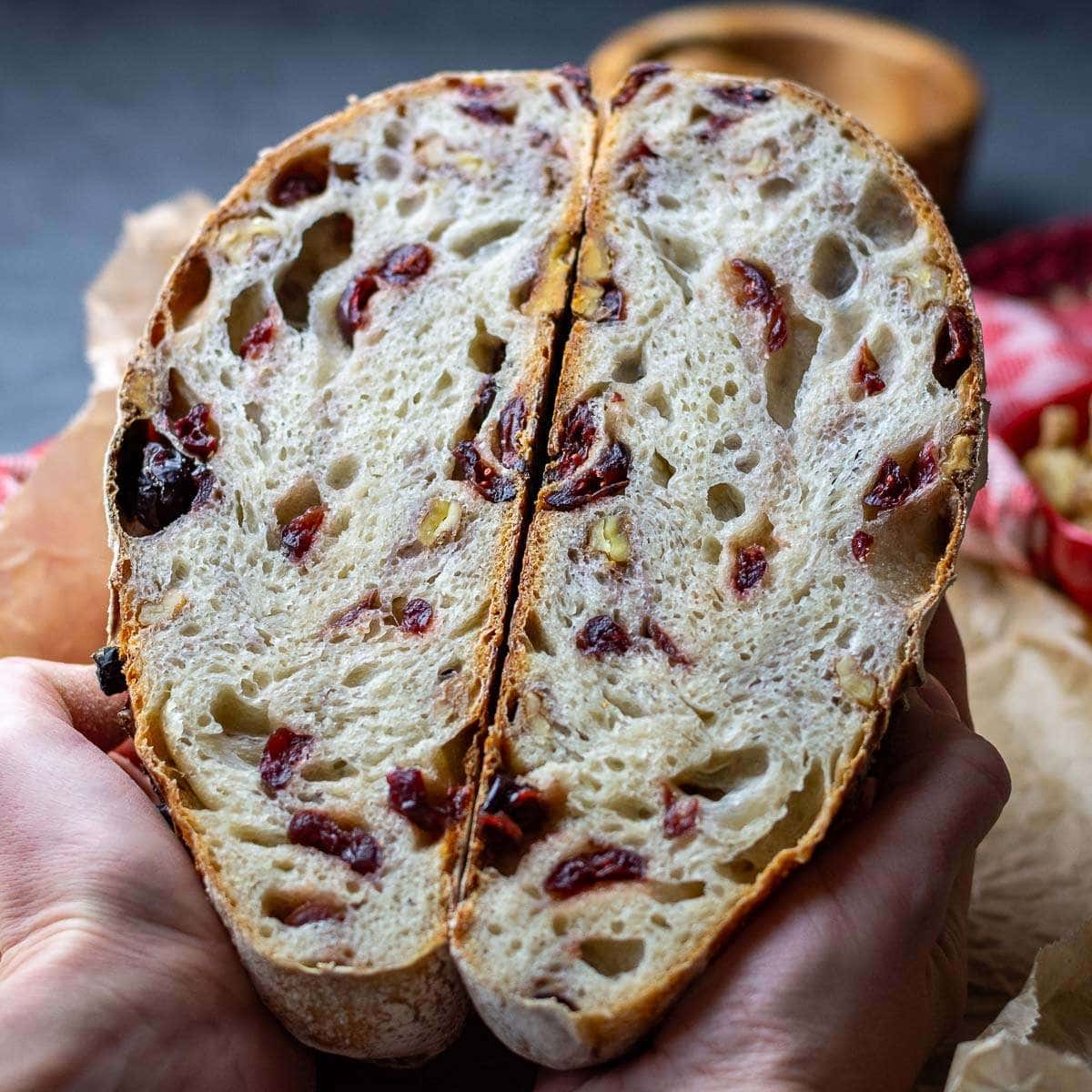
More recipes from our pantry that pair well with this bake.
Get More Recipes in Your Inbox
Join thousands of home bakers receiving weekly recipes, tips, and techniques to elevate your bread game.
No spam, ever. Unsubscribe anytime.
More from Baking Great Bread at Home
Tools, resources, and community to help you bake better bread

Crust & Crumb Academy
Go deeper into your craft. FREE courses, challenges, and real feedback. No gatekeeping. Perfection is not required.
Sourdough Starter Companion
Your AI-powered starter assistant. Track feedings, troubleshoot issues, and keep your starter thriving.

BakingGreatBread.com
Real bread for the rest of us

Baking Great Bread Blog
Recipes, tips, and stories from the bread journey
Recipe Converter
Convert sourdough recipes to yeast and back again
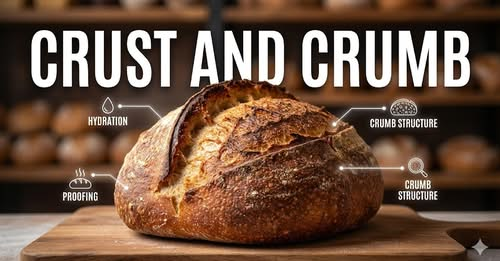
Crust & Crumb App
Your AI-powered baking assistant

Facebook Community
Join 50,000+ bakers sharing, learning, and supporting each other
Sourdough for the Rest of Us
Free beginner's guide to sourdough