 Baking Great Bread at Home
Light, Airy Raised Doughnuts
IntermediateClassic YeastedDoughnuts
by Henry Hunter Jr.
Fried at home, glazed while warm. Better than the drive-through, and you'll know exactly what's in them.
Rise Time
10-12 hours (including overnight)
Bake Time
Varies
Yield
20 doughnuts (about 50g each)

Perfection is not required
"This recipe honors Paul's generous spirit and delivers exactly what a homemade doughnut should be."— Henry Hunter Jr.
By Henry Hunter Jr., founder of Crust & Crumb Academy and Baking Great Bread at Home.
Authentic Flavor
In memory of Paul ('Bald Baker Paul'), who shared this recipe with our community and reminded us that the best recipes come with stories attached.
Equipment Needed
Ingredients
Dough
For Frying
For Finishing
Pro Tip
The dough will be soft and slightly sticky after mixing. That's correct—don't add more flour. The overnight chill firms it up beautifully.
Day 1
Combine the Ingredients
Evening (7:00 PM)
In the bowl of a stand mixer, combine the dry ingredients with eggs, lemon zest, and cold water. The lemon zest adds a subtle brightness that elevates the dough.
Click each step to mark complete
Add dry ingredients
In the bowl of a stand mixer, combine bread flour, sugar, salt, and .
Add wet ingredients
Add the eggs, finely grated lemon zest, and cold water to the bowl.
Initial mix
Using the dough hook, mix on low speed (setting 2) for 3-4 minutes until a shaggy dough forms and no dry flour remains.
Develop gluten
Increase to medium speed (setting 4) and mix for 6-8 minutes until the dough is smooth, pulls away from the sides of the bowl, and starts to climb the hook.
Rest the dough
Stop the mixer and let the dough rest for 5 minutes. This relaxes the and gives the mixer a break.
Precise Timers
Use these interactive timers to track your stages.
Initial mixing
Gluten development
Dough rest
Enrichment
Add the Butter
7:30 PM
Adding butter gradually ensures it incorporates fully without breaking the dough structure. This creates the tender, brioche-like crumb.
Click each step to mark complete
Add butter gradually
With the mixer running on medium-low speed (setting 3), add the softened butter a few pieces at a time.
Wait between additions
Wait until each addition is mostly incorporated before adding more. This takes 5-8 minutes total.
Final mix
Once all butter is added, increase to medium-high speed (setting 6) and mix for another 4-5 minutes.
Check dough readiness
The dough is ready when it is glossy, smooth, and very elastic; it pulls away cleanly from the sides and bottom of the bowl; it makes a slapping sound against the bowl; and it passes the .
Pro Tip
The dough will be soft and slightly sticky. That's correct—don't add more flour.
Precise Timers
Use these interactive timers to track your stages.
Butter incorporation
Final mixing
Bulk Rise
Bulk Fermentation
8:00 PM
The first rise develops flavor and structure before the overnight chill.
Click each step to mark complete
Transfer dough
Transfer the dough to a lightly greased bowl or container.
Cover
Cover tightly with plastic wrap.
Rise
Let rise at room temperature (70-75°F / 21-24°C) for 1.5-2 hours, until doubled in size and puffy.
⏱ Wait Time
Wait for the dough to double in size
Precise Timers
Use these interactive timers to track your stages.
Bulk fermentation
Cold Rest
Overnight Chill
10:00 PM
The cold rest firms up the butter, develops deep flavor, and makes the dough much easier to handle. Don't skip this step—same-day doughnuts simply don't have the same depth.
Click each step to mark complete
Deflate
Gently press down on the dough to deflate it.
Wrap tightly
Re-cover tightly with plastic wrap, pressing it directly onto the surface of the dough to prevent a skin from forming.
Refrigerate
Refrigerate for at least 8 hours or up to 24 hours.
⏱ Wait Time
Overnight cold fermentation develops flavor
Day 2
Divide and Shape
Morning (9:00 AM)
Working with cold dough makes shaping easy. If it becomes too soft and sticky, return it to the fridge for 15 minutes.
Click each step to mark complete
Prepare pans
Line two baking sheets with parchment paper and dust lightly with flour.
Remove dough
Remove the dough from the refrigerator. It will be firm and easy to work with.
Turn out
Turn the dough onto a lightly floured surface.
Divide
Using a and kitchen scale, divide the dough into 20 pieces (about 50g each).
Shape balls
To shape each doughnut: cup your hand over a piece of dough, roll it in a circular motion against the counter applying gentle pressure. The friction will pull the dough into a tight, smooth ball.
Arrange
Place seam-side down on the prepared baking sheet, spacing doughnuts at least 2 inches apart.
Pro Tip
Work quickly so the dough stays cold. If it becomes too soft and sticky, return it to the fridge for 15 minutes.
Proof
Final Proof
9:30 AM - 1:00 PM
Don't rush this step. Under-proofed doughnuts will be dense. The long proof is what makes them impossibly light.
Click each step to mark complete
Cover loosely
Cover the baking sheets loosely with plastic wrap or a clean kitchen towel.
Proof
Let the doughnuts proof at room temperature (70-75°F / 21-24°C) for 3-4 hours.
Check readiness
The doughnuts are ready when they have doubled in size, look puffy and pillowy, a gentle leaves an indent that slowly springs back, and they jiggle slightly when you shake the pan.
⏱ Wait Time
Patience is key—this long proof creates the signature lightness
Precise Timers
Use these interactive timers to track your stages.
Final proof
Prep Oil
Heat the Oil
12:30 PM
Proper oil temperature is critical. Too hot and the outside burns while the center stays raw. Too cool and the doughnuts absorb oil and become greasy.
Click each step to mark complete
Fill pot
Fill a deep-fat fryer, Dutch oven, or heavy pot with oil to a depth of at least 3 inches. The oil should not fill the pot more than halfway.
Heat oil
Heat the oil to 350°F (175°C). Use a thermometer—this is critical.
Set up station
Set up a wire rack over a baking sheet for draining. Place the sugar for tossing in a wide, shallow bowl.
Pro Tip
Start heating the oil about 30 minutes before you plan to fry.
Fry
Fry the Doughnuts
1:00 PM
Work in small batches to maintain oil temperature. Handle the proofed doughnuts gently to avoid deflating them.
Click each step to mark complete
Lift gently
Working in batches of 2-3 doughnuts at a time, use a floured to gently lift each doughnut from the pan. Handle them delicately to avoid deflating.
Add to oil
Carefully lower into the hot oil, top-side down.
Fry first side
Fry for 1.5-2 minutes on the first side until deep golden brown.
Press down
After about 1 minute, gently press down on any doughnuts that are floating high. This ensures even browning.
Flip
Flip using a spider strainer or slotted spoon.
Fry second side
Fry for another 1.5-2 minutes on the second side.
Drain
Remove to the wire rack to drain for 30-60 seconds.
Monitor temperature
Check the oil temperature between batches. Adjust the heat as needed to maintain 350°F (175°C).
Pro Tip
Total frying time: 3-4 minutes per batch. Don't overcrowd the pot.
Precise Timers
Use these interactive timers to track your stages.
First side
Second side
Finish
Sugar and Cool
The sugar sticks best when the doughnuts are warm. Don't wait too long after draining.
Click each step to mark complete
Toss in sugar
While the doughnuts are still warm (but not so hot they'll burn you), toss them in the sugar bowl. Roll to coat all sides generously.
Cool
Transfer to a clean wire rack and let cool for at least 15-20 minutes before filling.
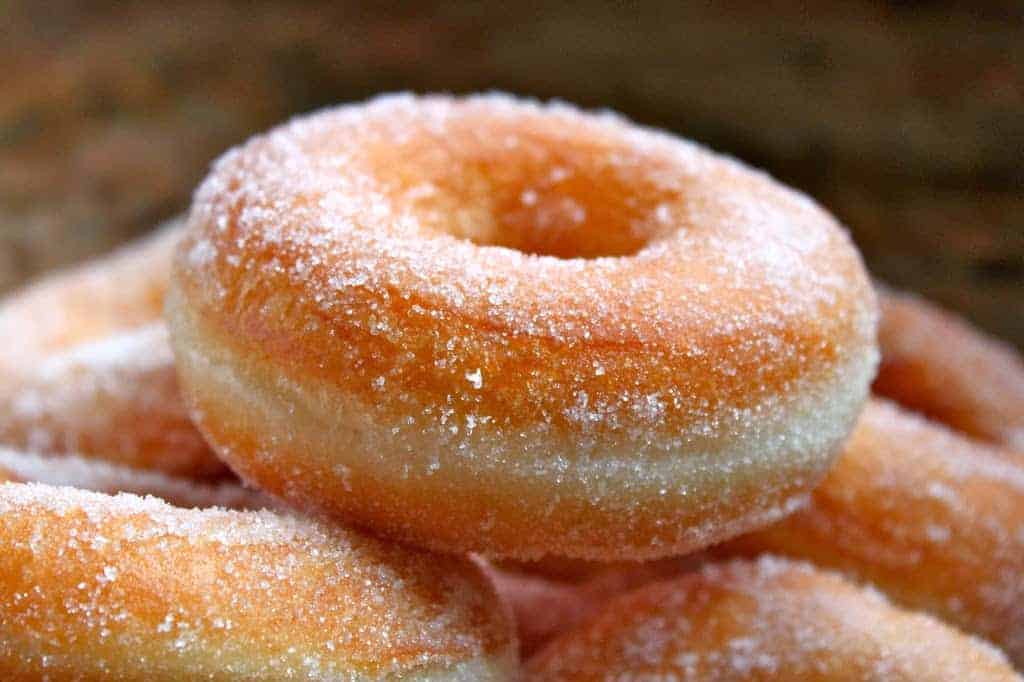
Perfectly golden and generously coated in sugar
Precise Timers
Use these interactive timers to track your stages.
Cooling time
Fill
Fill (Optional)
Transform your doughnuts into filled treats. Pastry cream, whipped cream, jam, Nutella, or lemon curd are all excellent choices.
Click each step to mark complete
Create opening
Use a chopstick, skewer, or paring knife to poke a hole in the side of each doughnut. Wiggle gently to create a small pocket inside.
Prepare piping bag
Fit a piping bag with a round tip (or use a zip-top bag with the corner cut off).
Fill
Insert the tip into the hole. Squeeze gently until you feel the doughnut become heavier and see the filling just start to peek out.
Amount
About 2-3 tablespoons of filling per doughnut.
Pro Tip
Popular fillings: pastry cream (crème pâtissière), whipped cream, raspberry or strawberry jam, Nutella, lemon curd.

Generously filled with pastry cream and topped with jam
The Final Step
Frying (Deep Fry)
Deep frying at 350°F (175°C) creates the perfect golden exterior while the interior stays light and fluffy.
Baking Methods
The classic method for yeasted doughnuts - produces light, airy results with a golden crust.
Equipment: Dutch oven or deep fryer, Candy thermometer, Spider strainer
Heat oil
Fill pot with 3 inches of neutral oil. Heat to 350°F (175°C).
Fry first side
Carefully lower doughnuts into oil. Fry 1.5-2 minutes until golden.
Flip and fry
Flip with spider strainer. Fry another 1.5-2 minutes.
Drain
Remove to wire rack. Drain 30-60 seconds before sugaring.
"Maintain 350°F throughout frying. Temperature drops when doughnuts are added—adjust heat as needed."
Nutrition Facts
Per 1 doughnut (plain, sugared) • 20 servings per recipe
* Values are estimates based on standard ingredients
Storage
Room Temperature
Store unfilled doughnuts in an airtight container for up to 2 days. They're best eaten the day they're made.
Refrigerated
Filled doughnuts should be refrigerated and eaten within 24 hours. Bring to room temperature before serving.
Frozen
Freeze unfilled, un-sugared doughnuts for up to 1 month. Thaw at room temperature, warm briefly in a 300°F (150°C) oven, then toss in sugar.
💡 These are best eaten fresh. The magic happens when they're still slightly warm from frying.
Your Feedback
Rate This Recipe
Loading ratings...
Troubleshooting
Baker's Notes
Common questions and solutions for perfect results
If you're serious about scoring, you need the right blade in your hand. Wire Monkey makes handcrafted bread lames from black walnut — built to last, balanced in the hand, and sharp enough to glide through cold dough cleanly every single time. No dragging, no hesitation marks. Just a clean cut.
Wire Monkey Handcrafted Bread Lames
You Might Also Enjoy
More recipes from our pantry that pair well with this bake.
Get More Recipes in Your Inbox
Join thousands of home bakers receiving weekly recipes, tips, and techniques to elevate your bread game.
No spam, ever. Unsubscribe anytime.
More from Baking Great Bread at Home
Tools, resources, and community to help you bake better bread

Crust & Crumb Academy
Go deeper into your craft. FREE courses, challenges, and real feedback. No gatekeeping. Perfection is not required.
Sourdough Starter Companion
Your AI-powered starter assistant. Track feedings, troubleshoot issues, and keep your starter thriving.

BakingGreatBread.com
Real bread for the rest of us

Baking Great Bread Blog
Recipes, tips, and stories from the bread journey
Recipe Converter
Convert sourdough recipes to yeast and back again
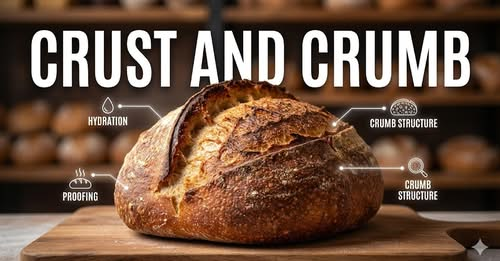
Crust & Crumb App
Your AI-powered baking assistant

Facebook Community
Join 50,000+ bakers sharing, learning, and supporting each other
Sourdough for the Rest of Us
Free beginner's guide to sourdough