 Baking Great Bread at Home
Overnight Spiced Buns with Natural Fermentation and a Traditional Flour Paste Cross
IntermediateSourdough Hot CrossBuns
by Henry Hunter Jr.
All the tradition. Better flavor. Your starter does the work overnight.
Fermentation
8–12 hours overnight bulk
Bake Time
20–25 minutes
Yield
12 buns in a 9×13 pan
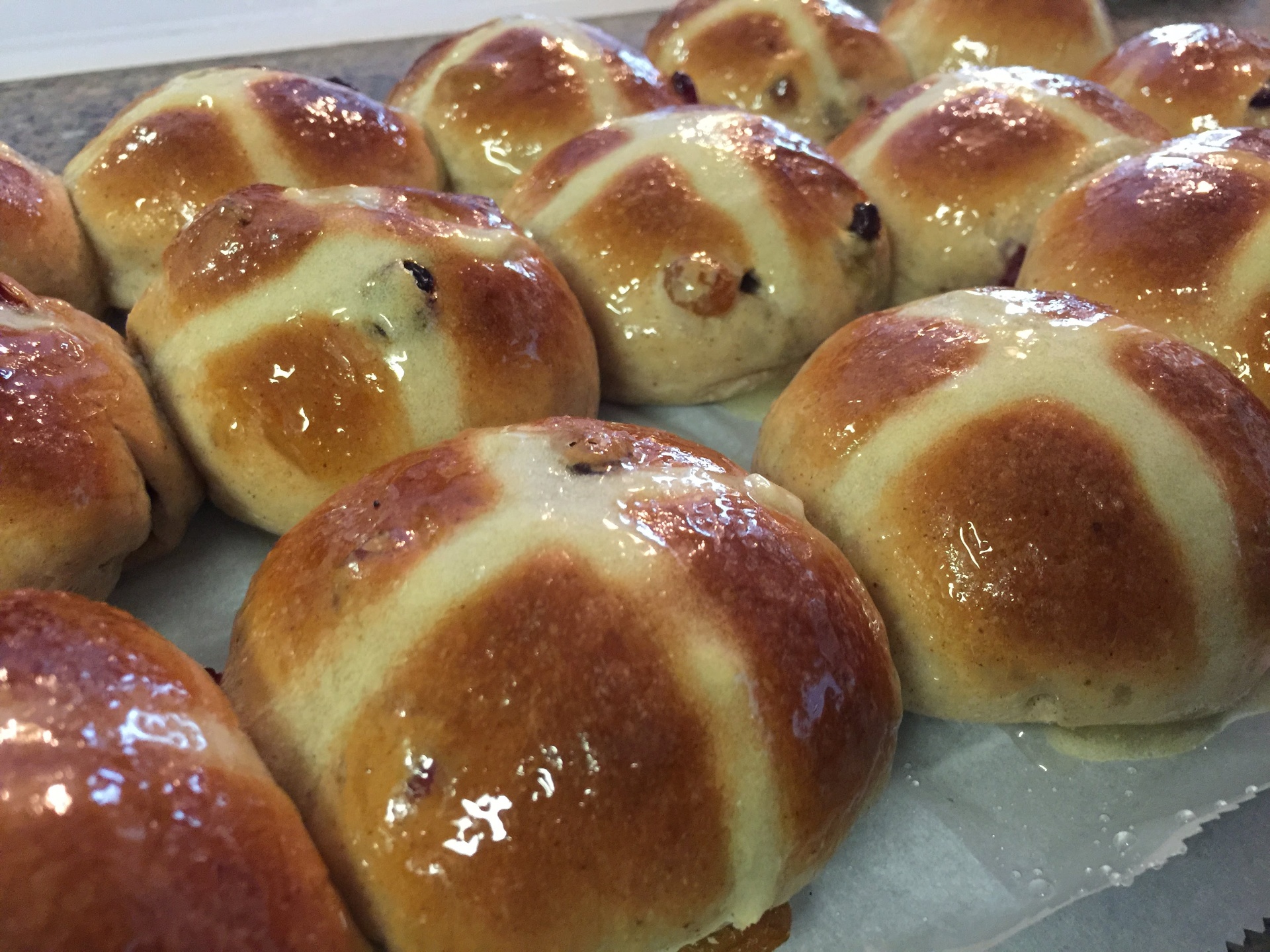

Perfection is not required
"Perfection is not required. Progress is."— Henry Hunter Jr.
By Henry Hunter Jr., founder of Crust & Crumb Academy and Baking Great Bread at Home.
Authentic Flavor
Henry Hunter Jr. is the founder of Crust & Crumb Academy and the Baking Great Bread at Home community. This sourdough version uses a sweet levain to solve the sourness problem that keeps most bakers away from sourdough enriched doughs.
Equipment Needed
Ingredients
Sweet Levain
Build this 8–10 hours before mixing. The sugar feeds your starter quickly and produces a milder, less acidic levain — which means hot cross buns that taste spiced and sweet, not sour.
Tangzhong (Water Roux)
Make this while the levain builds. Cool completely before using.
Fruit Soak
The Dough
Flour Paste Cross
Traditional method — piped before baking.
Egg Wash
Apricot-Orange Glaze
Pro Tip
Keep the cinnamon at this amount. More cinnamon = slower fermentation. Cinnamaldehyde, the compound that gives cinnamon its flavor, inhibits yeast activity. In a sourdough dough with fat, sugar, and eggs already slowing things down, too much cinnamon can stall the bulk fermentation completely.
8–10 hours before mixing
Build the Sweet Levain
A built with milk and a touch of sugar instead of plain water. The milk and sugar create a milder fermentation environment — less acetic acid, more lactic. The result is a levain that leavens well without making your buns taste sour.
Click each step to mark complete
Mix the levain
In a clean jar, combine the active starter, bread flour, lukewarm milk, and sugar. Stir until well combined — the mixture will be stiff. Close the lid loosely and leave at room temperature (75–78°F / 24–26°C).
Watch for peak
The levain is ready when it has doubled or more in size, is domed on top, and has visible bubbles throughout. This takes 8–10 hours at 75–78°F. A levain built with milk moves a little slower than one built with water — that's normal.
⏱ Wait Time
8–10 hours
Two types of acid
Sourdough produces two organic acids: lactic (mild, yogurt-like) and acetic (sharp, vinegary). Acetic acid is what most people mean when they say sourdough is 'too sour.' It develops more in cooler, drier, longer ferments. Lactic acid dominates in warmer, wetter, shorter ferments.
How this levain shifts the balance
By using milk instead of water (adding fat and protein) and a small amount of sugar (additional food for the yeast), we create a warmer, richer fermentation environment that favors lactic acid production over acetic. Lower inoculation (17%) also limits how long the fermentation runs before baking, which keeps acidity in check.
The cinnamon factor
Cinnamon slows yeast activity via cinnamaldehyde, a natural antifungal. In this recipe, that's actually an advantage for flavor control — the slower ferment means less acidity accumulates. It's a built-in brake on over-fermentation.
The Takeaway
Sweet levain + 17% inoculation + enriched dough = hot cross buns that taste like the recipe, not the starter.
Precise Timers
Use these interactive timers to track your stages.
Levain Build
While levain builds
Soak Fruit and Make Tangzhong
Do both of these while the levain is building. Both need to be cool before they hit the dough.
Click each step to mark complete
Soak the fruit
Combine currants and candied orange peel in a bowl. Pour the hot tea or orange juice over them. Cover and let soak at least 30 minutes. Drain well before using.
Make the tangzhong
Whisk 25g bread flour and 125g whole milk in a small saucepan until smooth. Heat over medium-low, stirring constantly, until the mixture thickens to a paste and reaches 65°C (149°F) — about 3–4 minutes. Press plastic wrap directly onto the surface and cool completely.
Mix
Mix the Dough
Build the dough once the levain is at peak — doubled, domed, and bubbly. Same method as the yeasted version: dry ingredients first, wet ingredients in, butter last, fruit after the gluten is built.
Click each step to mark complete
Combine dry ingredients
In your stand mixer bowl, whisk together the bread flour, sugar, salt, cinnamon, allspice, nutmeg, cardamom, and orange zest.
Add wet ingredients and levain
Add the lukewarm milk, eggs, cooled tangzhong, and all of the sweet levain. Mix on low with the dough hook for 2–3 minutes until a shaggy dough forms.
Add butter
Add softened butter in small pieces with the mixer running on low. Once incorporated, increase to medium-low and knead for 8–10 minutes until smooth and elastic. By hand: 12–14 minutes.
Add the fruit
Add the drained soaked fruit and mix on low for 2 minutes until evenly distributed. Don't overwork.
Pro Tip
This dough will feel stickier than a lean sourdough. That's the enrichment doing its job. Resist the flour. Let the mixer work.
Precise Timers
Use these interactive timers to track your stages.
Knead
Overnight Bulk
Overnight Bulk Fermentation
The enriched dough ferments slowly overnight. Butter, eggs, and sugar all slow the yeast — which is actually an advantage here. Slow fermentation = better flavor, no over-fermentation risk.
Click each step to mark complete
Cover and ferment
Shape the dough into a ball, place in a lightly greased bowl, and cover with plastic wrap. Ferment at room temperature (75–78°F / 24–26°C) overnight, about 8–12 hours, until the dough has approximately doubled.
Check in the morning
The dough is ready when it's noticeably puffed, slightly jiggly when you shake the bowl, and a floured finger pressed in springs back slowly. If it springs back immediately, give it more time. If the indent stays, move on — it's at or past peak.
⏱ Wait Time
8–12 hours
Pro Tip
If your kitchen is warmer than 78°F, the bulk will go faster. Check at 6–7 hours. If your kitchen is cooler than 72°F, it may take up to 14 hours. The dough tells you when it's ready — watch the dough, not the clock.
Shape
Divide and Shape
Same technique as the yeasted version. Twelve equal buns, shaped tight, placed touching in the pan.
Click each step to mark complete
Divide
Punch down the dough gently and turn out onto a lightly floured surface. Weigh the total dough and divide by 12. Each bun should be approximately 85–90g.
Shape each bun
Pull the edges toward the center, rotating as you go, to build surface tension. Flip seam-side down. Cup your hand and roll in a tight circle on the surface until smooth and taut.
Arrange in pan
Place shaped buns in the greased 9×13 pan in a 3×4 grid with about ½ inch of space between each bun.
Proof & Cross
Final Proof and Flour Paste Cross
The final proof takes longer than the yeasted version — 2 to 3 hours is normal for a cold, enriched sourdough dough coming up to temperature. Don't rush it. Pipe the cross right before baking.
Click each step to mark complete
Final proof
Cover the pan loosely and let proof at room temperature (75–78°F) for 2–3 hours until the buns are visibly puffed, touching their neighbors, and spring back slowly when gently pressed.
Preheat
20 minutes before the end of the proof, preheat your oven to 400°F (200°C).
Make the flour paste cross
Whisk together the bread flour, water, and sugar until completely smooth. The paste should be thick enough to hold its shape when piped — like a stiff toothpaste. Adjust water by the teaspoon if needed.
Pipe the crosses
Transfer paste to a piping bag or zip-lock bag with a small corner snipped. Pipe one continuous line across each row of buns, then rotate 90 degrees and pipe across the columns. Pipe slightly thinner than you want — they spread a little in the oven.
Egg wash
Brush exposed dough (not the paste) with egg wash.
⏱ Wait Time
2–3 hours
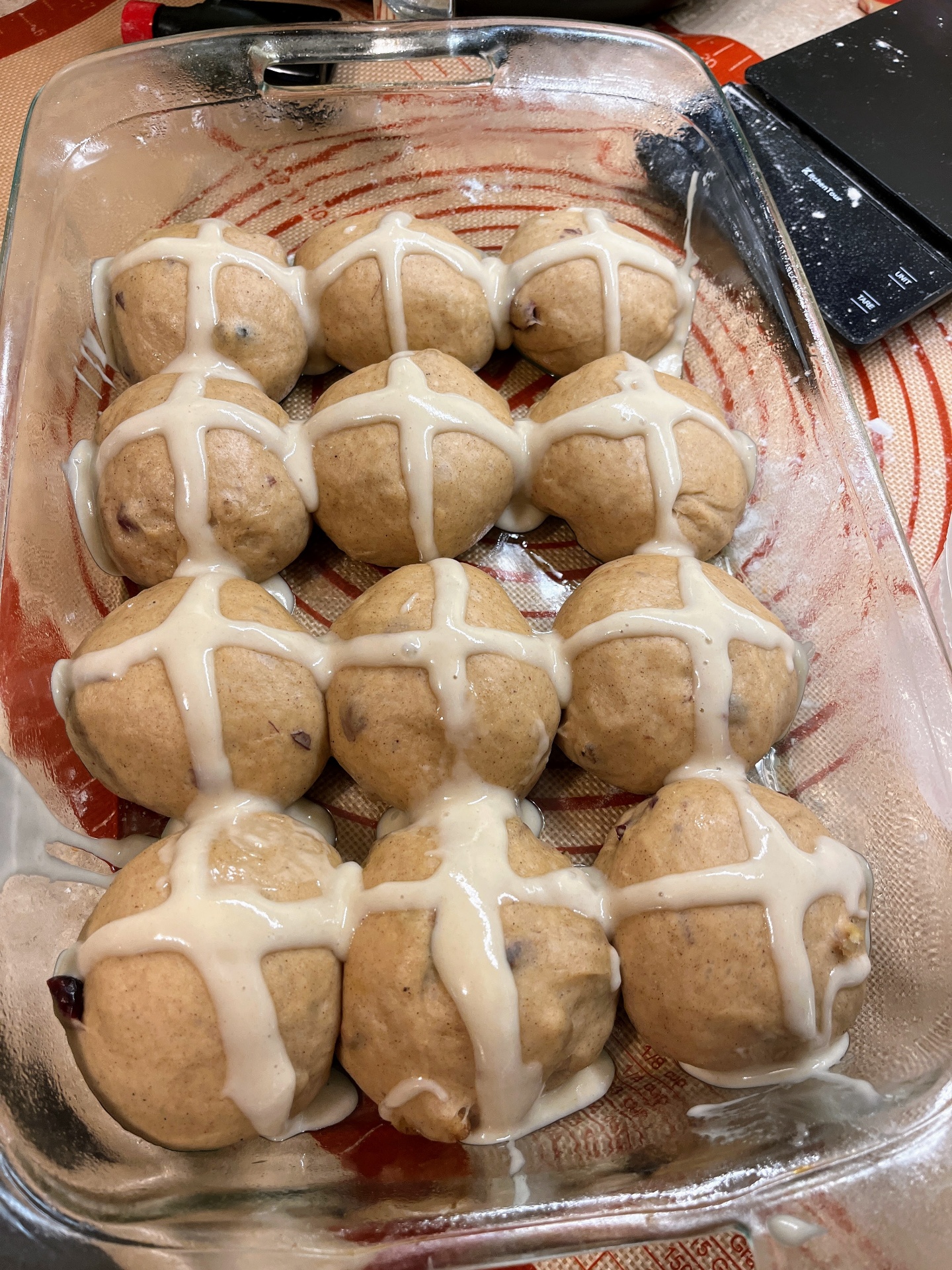
Flour paste crosses piped and ready for the oven
Precise Timers
Use these interactive timers to track your stages.
Final Proof
Bake
Bake and Glaze
Same bake as the yeasted version. Hot oven, short time, glaze immediately on exit.
Step by Step
Bake
Bake at 400°F (200°C) for 20–25 minutes until deep golden brown. Internal temperature should reach 190°F (88°C).
Make the glaze
While the buns bake, combine the apricot jam (or orange marmalade) and water in a small saucepan over medium heat. Stir until smooth and runny.
Glaze immediately
Brush generously over the entire surface the moment the buns come out of the oven. Let cool in the pan for 10–15 minutes before pulling apart.
Bake
Cool
Baking Methods
Equipment: 9×13 inch baking pan, greased or lined with parchment
Preheat
400°F (200°C), center rack.
Pipe cross
Flour paste before going in.
Egg wash
Brush exposed dough only.
Bake
20–25 minutes until deep golden. Internal temp 190°F (88°C).
Glaze
Brush warm apricot-orange glaze immediately on exit.
Nutrition Facts
Per 1 bun • 12 servings per recipe
* Values are estimates based on standard ingredients
Storage
Room Temperature
2–3 days in an airtight container. The tangzhong keeps them softer longer than most enriched buns.
Refrigerated
Up to 5 days. Reheat at 300°F (150°C) for 10 minutes, uncovered.
Frozen
Up to 3 months. Freeze without glaze after cooling completely. Rewarm and reglaze.
Refresh
Toast individual buns or warm the whole pan at 300°F (150°C) for 10 minutes. Serve with butter.
Your Feedback
Rate This Recipe
Loading ratings...
Troubleshooting
Baker's Notes
Common questions and solutions for perfect results
If you're serious about scoring, you need the right blade in your hand. Wire Monkey makes handcrafted bread lames from black walnut — built to last, balanced in the hand, and sharp enough to glide through cold dough cleanly every single time. No dragging, no hesitation marks. Just a clean cut.
Wire Monkey Handcrafted Bread Lames
You Might Also Enjoy
More recipes from our pantry that pair well with this bake.
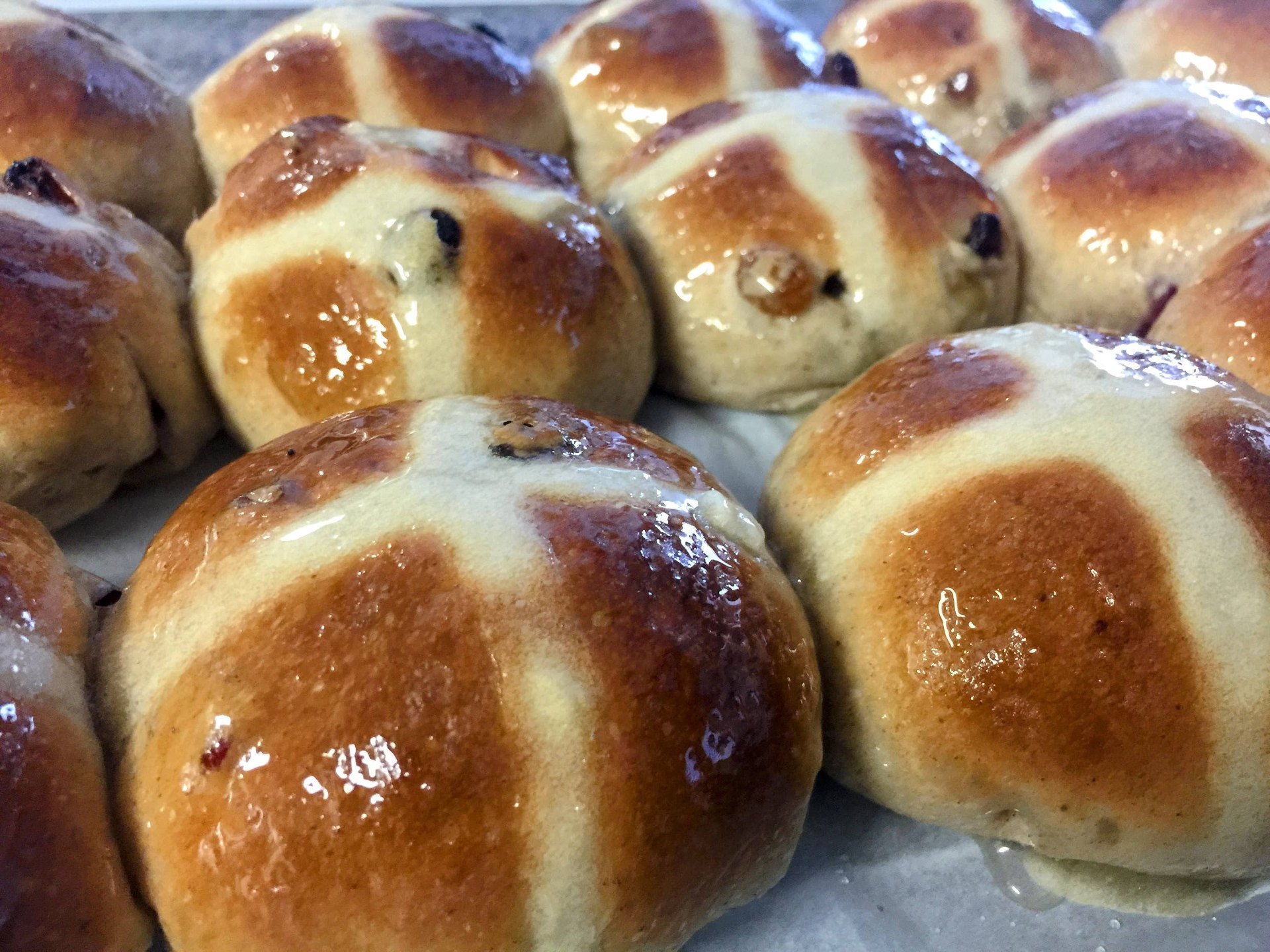
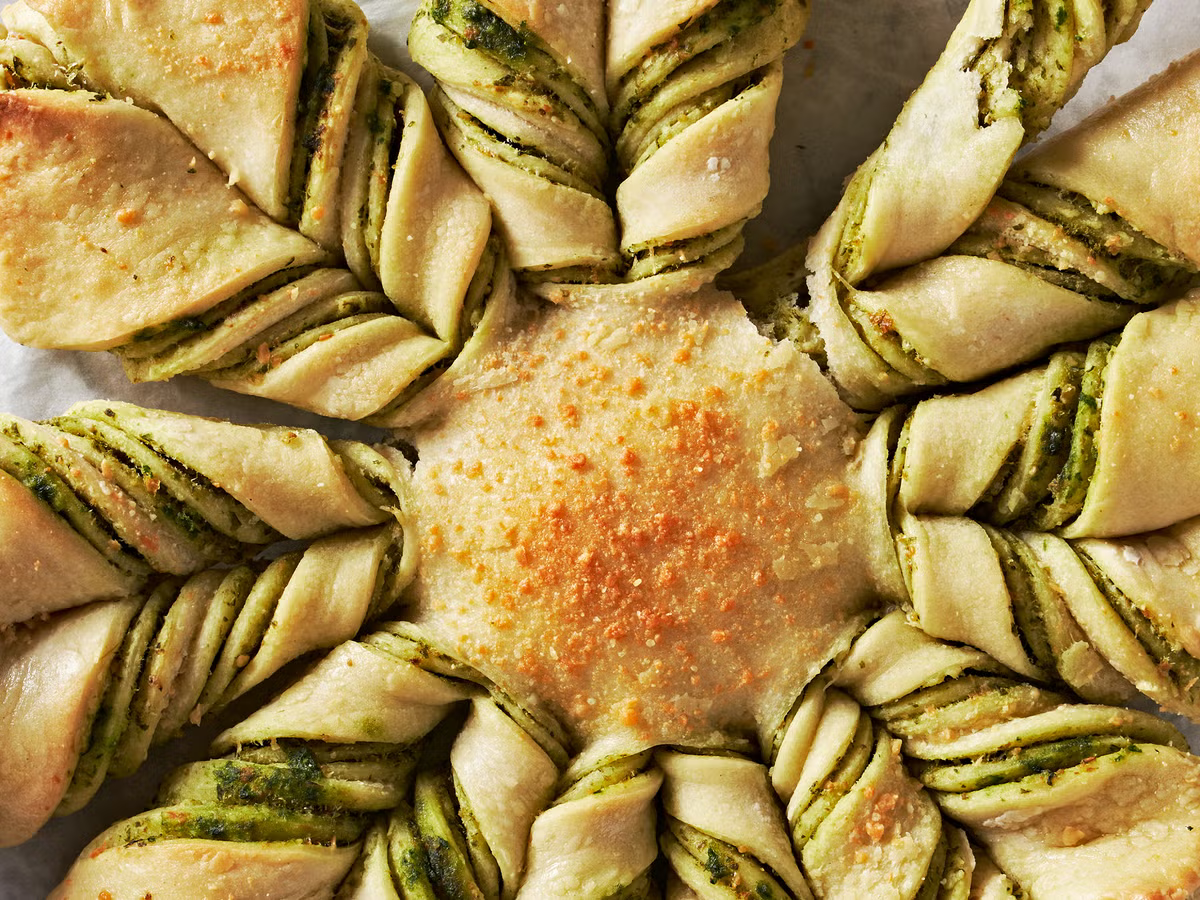

Get More Recipes in Your Inbox
Join thousands of home bakers receiving weekly recipes, tips, and techniques to elevate your bread game.
No spam, ever. Unsubscribe anytime.
More from Baking Great Bread at Home
Tools, resources, and community to help you bake better bread
Crust & Crumb Academy
Go deeper into your craft. FREE courses, challenges, and real feedback. No gatekeeping. Perfection is not required.
Sourdough Starter Companion
Your AI-powered starter assistant. Track feedings, troubleshoot issues, and keep your starter thriving.

BakingGreatBread.com
Real bread for the rest of us

Baking Great Bread Blog
Recipes, tips, and stories from the bread journey
Recipe Converter
Convert sourdough recipes to yeast and back again
Crust & Crumb App
Your AI-powered baking assistant
Facebook Community
Join 50,000+ bakers sharing, learning, and supporting each other
Sourdough for the Rest of Us
Free beginner's guide to sourdough