 Baking Great Bread at Home
A same-day ancient grain loaf for whole, fresh-milled einkorn flour
BeginnerFresh-Milled Einkorn YeastedBread
by Henry Hunter Jr.
All the einkorn flavor, none of the overnight wait
Fermentation
2 hours bulk plus 1 hour final proof
Bake Time
45 minutes
Yield
One 900g loaf, about 12 slices
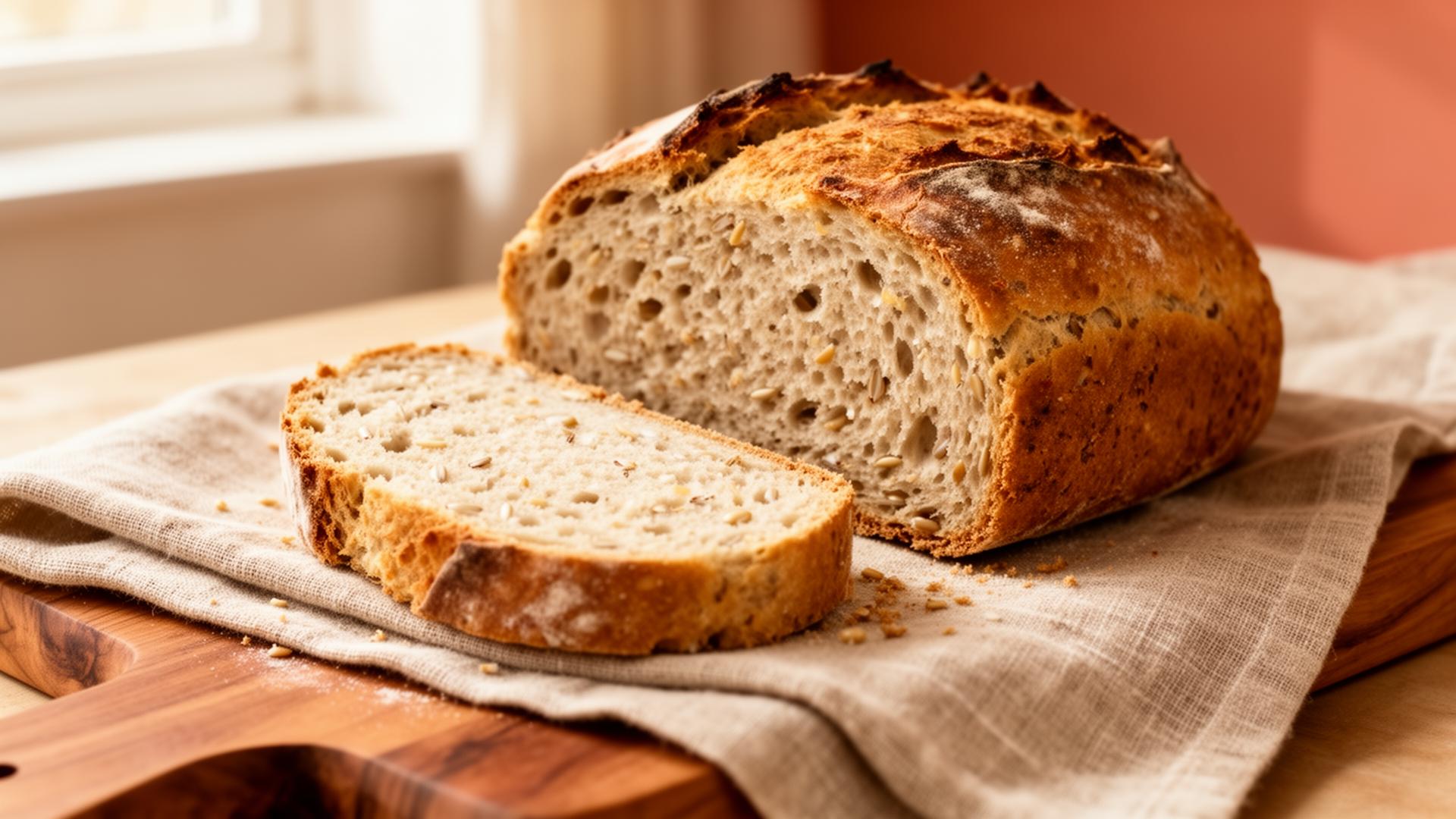

Perfection is not required
"Same grain, same flavor. Different schedule."— Henry Hunter Jr.
By Henry Hunter Jr., founder of Crust & Crumb Academy and Baking Great Bread at Home.
Authentic Flavor
This is the same-day version for bakers who want to explore einkorn without an overnight commitment. Built for whole, fresh-milled einkorn from local farmers, with the same traditional dough conditioner system as the sourdough version.
Equipment Needed
Ingredients
Final Dough
Use the 70/30 einkorn-spelt blend for better structure, or 100% einkorn for pure ancient grain flavor.
Pro Tip
If you want pure einkorn flavor, use 500g whole einkorn and skip the spelt. Expect a denser, more crumbly loaf. The 70/30 blend is the best balance of flavor and structure for most bakers.
Start
Activate the Yeast
Even instant yeast benefits from a quick activation in einkorn dough. The honey gives the yeast something to feed on right away, building momentum before the flour goes in.
Click each step to mark complete
Mix water, yeast, and honey
In a large mixing bowl, whisk together the warm water (95-105F / 35-40C), instant yeast, and honey. Let it sit for 5 minutes. You should see small bubbles forming on the surface, that's the yeast waking up.
Add the oil and lecithin
Whisk in the olive oil (or melted butter) and lecithin if you're using it. The mixture will look cloudy and slightly emulsified.
⏱ Wait Time
5 minutes
Pro Tip
If you're using active dry yeast instead of instant, the same amount works but the bloom step becomes essential, not optional. Wait until you see real foaming, about 8 to 10 minutes.
Mix
Mix the Dough
Einkorn dough mixes wetter and slacker than modern wheat dough. Trust the texture, don't add flour to fix it.
Click each step to mark complete
Add the dry ingredients
To the wet mixture, add the einkorn flour, spelt flour (if using), salt, and vitamin C powder. Mix with a or your hand until no dry flour remains. The dough will be wet, sticky, and shaggy. This is correct.
Cover and rest
Cover the bowl with a damp towel or plastic wrap. Let it rest for 20 minutes. This rest period lets the flour fully hydrate and gives the yeast a head start before bulk fermentation.
⏱ Wait Time
20 minutes
Bulk
Bulk Fermentation with Coil Folds
Yeasted einkorn ferments faster than sourdough einkorn. The whole bulk takes about 2 hours at room temp (70-75F / 21-24C). Watch the dough, not the clock.
Click each step to mark complete
First coil fold (after 20-min rest)
With wet hands, lift the center of the dough straight up, letting the bottom fold under. Rotate the bowl 90 degrees and repeat 3 more times. The dough will feel slack and batter-like. That's normal.
Second coil fold (45 minutes later)
Repeat the . The dough should feel slightly tighter, with more visible bubbles forming. Cover the bowl and let it rest until bulk is complete.
Watch for the end of bulk
Bulk is done when the dough has increased in volume by 50% to 75% (not doubled, einkorn can't hold doubled volume cleanly). Look for visible bubbles on the surface, a domed top, and a soft jiggle when you nudge the bowl. This will take about 1 hour after the last fold, depending on temperature.
⏱ Wait Time
1½-2½ hours
Pro Tip
If your dough doubles in volume during bulk, it's overproofed. Yeasted einkorn moves faster than sourdough, so check it every 20 minutes once you see bubbles starting to form on top.
Shape & Proof
Shape and Final Proof
No cold retard for this one. Yeasted einkorn proofs at room temperature and goes straight to the oven.
Click each step to mark complete
Pre-shape
Turn the dough out onto a lightly floured surface. Use a to gently tuck the edges into the center, forming a loose round (for a boule) or log (for a pan loaf). Let it rest, seam-side down, for 15 minutes.
Final shape
For a boule: flip the dough seam-side up, fold the edges to the center, then flip seam-side down and place in a floured banneton. For a loaf pan: shape into a log, pinch the seam closed, and place seam-side down in a greased 9x5 loaf pan.
Final proof
Cover loosely with a damp towel or plastic wrap. Proof at room temp for 45 minutes to 1 hour, until the dough is puffy and a leaves a slow-springing dent. Don't over-proof, einkorn collapses fast in the final proof.
⏱ Wait Time
45-60 minutes
Pro Tip
Start preheating your oven 30 minutes into the final proof so the Dutch oven is fully heated when the dough is ready.
Shaping
Shape the Loaf
Einkorn dough is fragile. Use the gentlest possible shaping technique that still creates surface tension.
Pan Loaf (Loaf Pan)
The easiest and most forgiving option for yeasted einkorn. The pan supports the fragile dough and produces consistent sandwich-style slices.
RecommendedClick each step to mark complete
Pre-shape into a rough log
Tuck the edges of the dough toward the center, then roll into a log shape.
Rest 15 minutes
Let the dough relax.
Final shape and pan
Re-roll into a tight log, pinch the seam closed, and place seam-side down in a greased 9x5 loaf pan.
Round (Boule)
More artisan-looking but less forgiving. Best if you have a banneton and a Dutch oven.
Click each step to mark complete
Pre-shape into a loose round
Tuck the edges into the center using a bench scraper.
Rest 15 minutes
Let the dough relax.
Final shape
Flip seam-side up, fold edges to center, flip seam-side down, and place in a round banneton.
Proof Test: Do a gentle poke test before baking. Press a wet finger about ½ inch into the dough. If it springs back slowly and leaves a small indent, it's ready. If it springs back fast, give it 10 more minutes.
Bake
Bake the Loaf
Einkorn browns fast. Bake cooler than your usual yeasted bread and watch the color, not the timer.
Step by Step
Preheat the Dutch oven
Place the in the cold oven and preheat to 425F (220C) for 30 minutes. The Dutch oven needs to be fully heated before the dough goes in. Skip this step if using a loaf pan, just preheat the oven.
Score and load (Dutch oven method)
Tip the dough onto a parchment round, seam-side down. Score with one decisive slash about ½ inch (1cm) deep. Lift the dough by the parchment and lower it into the hot Dutch oven. Cover with the lid.
Or load the loaf pan
If using a loaf pan, simply place it in the preheated oven. No scoring needed for pan loaves.
Bake covered (Dutch oven only)
Bake covered at 425F (220C) for 20 minutes. The lid traps steam, which helps the crust set and gives oven spring.
Bake uncovered or open oven
Remove the Dutch oven lid (or for loaf pan, just continue baking). Reduce the temperature to 400F (200C). Bake another 20 to 25 minutes, until the crust is deep golden brown. Internal temp should reach 195-200F (90-93C). Don't push past that, einkorn over-bakes quickly.
Cool fully
Transfer the loaf to a cooling rack. Let it cool completely, at least 1 hour, before slicing. Cutting hot einkorn bread destroys the crumb, more so than with modern wheat. Patience pays off.
Preheat Dutch oven
Bake covered
Bake uncovered
Cool
Baking Methods
The most forgiving method for yeasted einkorn. The pan supports the fragile dough through the bake and produces a clean, sliceable loaf.
Equipment: 9x5 loaf pan, greased
Preheat
Preheat oven to 425F (220C) for 20 minutes.
Bake
Bake at 425F (220C) for 20 minutes.
Reduce and finish
Reduce to 400F (200C) and bake 20-25 more minutes until deep golden and 195-200F (90-93C) internal.
"Watch the color, not the timer. Einkorn browns fast and can go from perfect to over-baked in 5 minutes."
Nutrition Facts
Per 1 slice (75g) • 12 servings per recipe
* Values are estimates based on standard ingredients
Storage
Room Temperature
1-2 days in a paper bag or wrapped in cloth. After day 2, toast it.
Refrigerated
Not recommended. Speeds staling.
Frozen
Up to 3 months. Slice the loaf the day it's baked and wrap individual slices in parchment.
Refresh
Toast slices at high heat or warm a whole loaf at 325F (165C) for 10 minutes.
Your Feedback
Rate This Recipe
Loading ratings...
Troubleshooting
Baker's Notes
Common questions and solutions for perfect results
If you're serious about scoring, you need the right blade in your hand. Wire Monkey makes handcrafted bread lames from black walnut — built to last, balanced in the hand, and sharp enough to glide through cold dough cleanly every single time. No dragging, no hesitation marks. Just a clean cut.
Wire Monkey Handcrafted Bread Lames
You Might Also Enjoy
More recipes from our pantry that pair well with this bake.
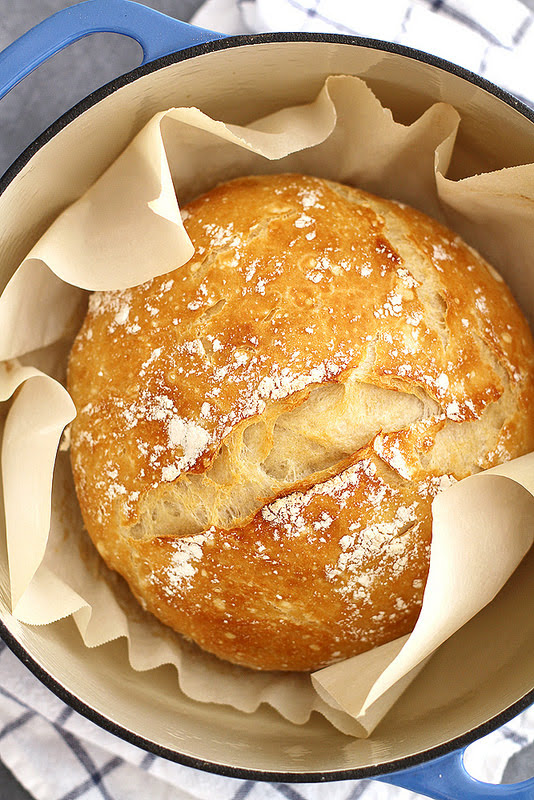
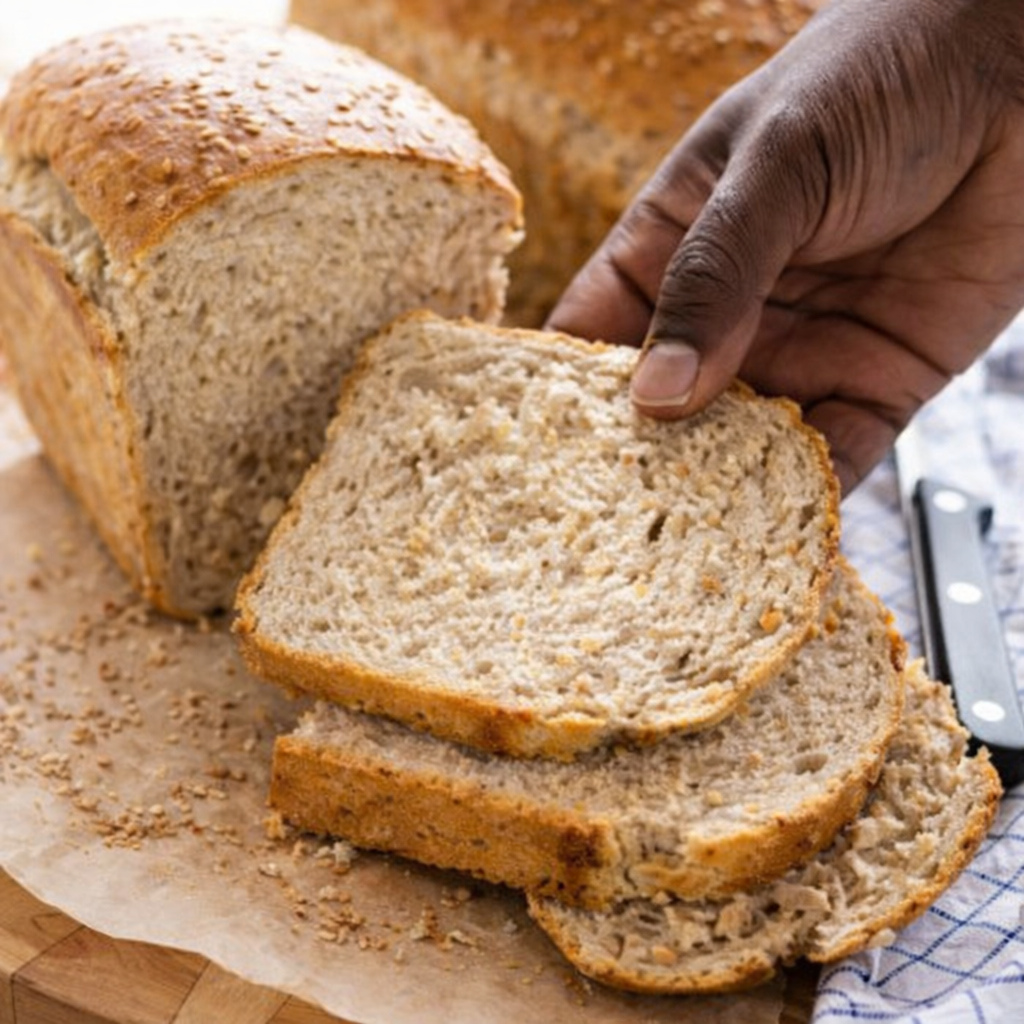

Get More Recipes in Your Inbox
Join thousands of home bakers receiving weekly recipes, tips, and techniques to elevate your bread game.
No spam, ever. Unsubscribe anytime.
More from Baking Great Bread at Home
Tools, resources, and community to help you bake better bread

Crust & Crumb Academy
Go deeper into your craft. FREE courses, challenges, and real feedback. No gatekeeping. Perfection is not required.
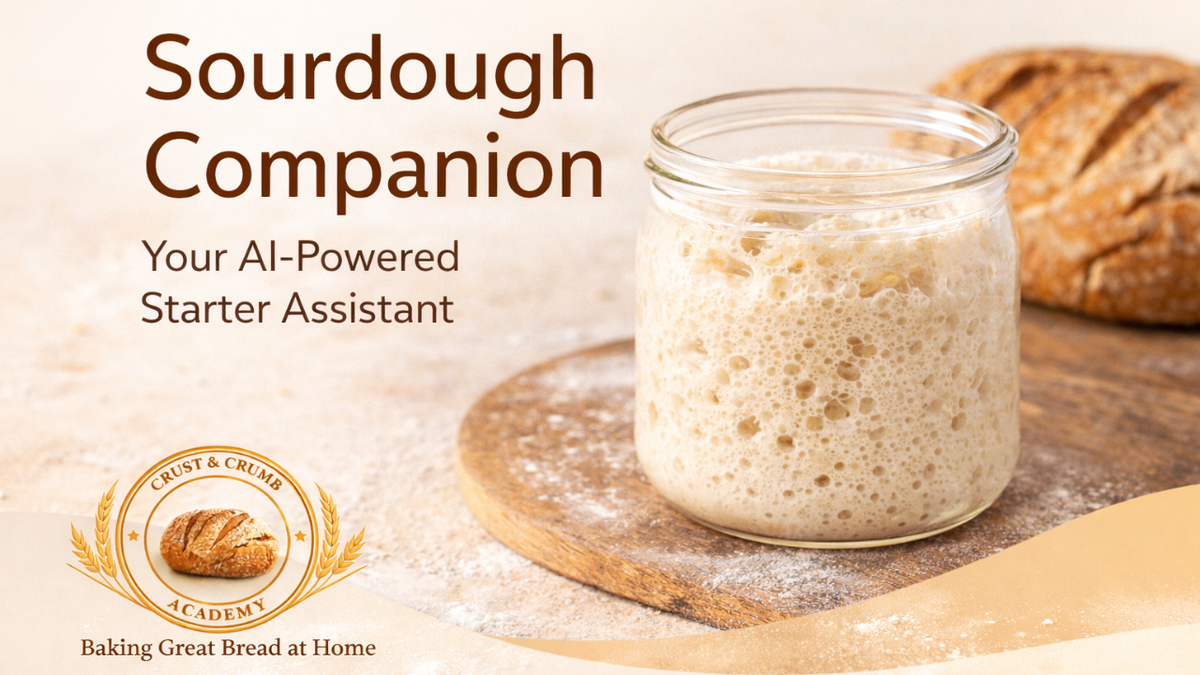
Sourdough Starter Companion
Your AI-powered starter assistant. Track feedings, troubleshoot issues, and keep your starter thriving.

BakingGreatBread.com
Real bread for the rest of us
Baking Great Bread Blog
Recipes, tips, and stories from the bread journey
Recipe Converter
Convert sourdough recipes to yeast and back again
Crust & Crumb App
Your AI-powered baking assistant
Facebook Community
Join 50,000+ bakers sharing, learning, and supporting each other
Sourdough for the Rest of Us
Free beginner's guide to sourdough