 Baking Great Bread at Home
From Flour to Loaf in About 2 Hours
BeginnerFast 2-Hour No-KneadBread
by Henry Hunter Jr.
Real bread, real fast. No kneading, no waiting until tomorrow.
Fermentation
1 hour
Bake Time
45 minutes
Yield
About 8-10 slices
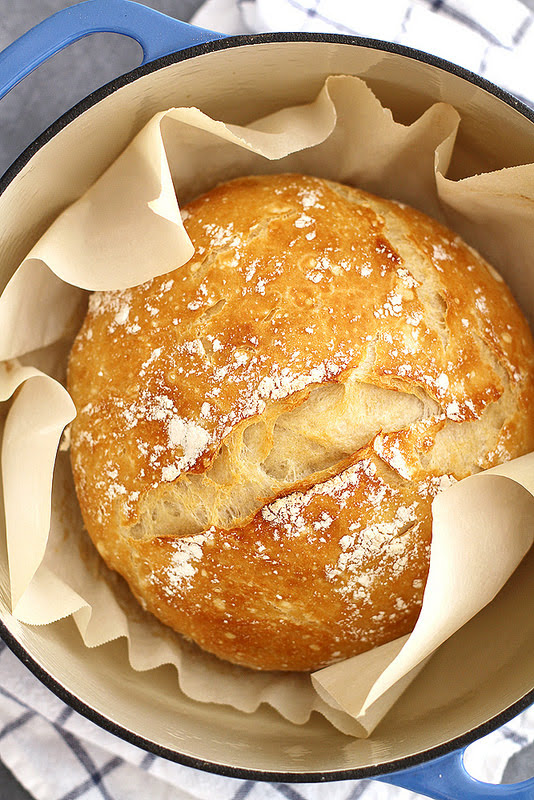

Perfection is not required
"Perfection is not required. Progress is."— Henry Hunter Jr.
By Henry Hunter Jr., founder of Crust & Crumb Academy and Baking Great Bread at Home.
Authentic Flavor
Henry Hunter Jr. teaches home bakers at Crust & Crumb Academy and through the Baking Great Bread at Home community. His philosophy: great bread doesn't have to be complicated.
Equipment Needed
Ingredients
The Dough
Pro Tip
The warm water (105-110°F / 40-43°C) is what makes this fast. We're creating ideal conditions for the yeast to work quickly rather than letting time do the work. Use a thermometer — water that's too hot will kill the yeast.
Mix
Mix the Dough
Five minutes of work. We're using a full packet of yeast and warm water to speed up what the overnight recipe does slowly.
Click each step to mark complete
Activate the yeast
In your mixing bowl, combine the warm water and yeast. If using honey or sugar, add it now. Stir briefly and let sit for 5 minutes. You should see it start to foam. If it doesn't foam, your water may be too hot or your yeast too old.
Add flour and salt
Add the flour and salt to the bowl. Stir with a wooden spoon or dough whisk until no dry flour remains. The dough will be rough and shaggy. Cover the bowl with plastic wrap or a kitchen towel.
Flavor Development
The overnight no-knead loaf uses a tiny amount of yeast and 12-18 hours to build complex flavor. This loaf uses a full packet and 2 hours. You'll get less tangy depth and a slightly more uniform crumb. But here's the truth: it still tastes a lot better than store-bought bread, and you made it in the time it takes to watch a movie.
When to Use This Recipe
When you forgot to plan ahead. When you need bread for dinner. When someone's coming over in two hours and you want to look like a baker. This is that recipe.
The Takeaway
You're trading some flavor complexity for speed. For a weeknight loaf, that's a completely reasonable trade.
Precise Timers
Use these interactive timers to track your stages.
Yeast Activation
Rise
Warm Rise
We want a warm spot to speed this up. Top of the fridge, a sunny counter, or a slightly warmed (then turned off) oven all work great.
Click each step to mark complete
Rise in a warm spot
Place the covered bowl in the warmest spot in your kitchen. The ideal temperature is 80-85°F (26-29°C). If your oven has a proof setting, use it. Otherwise, heat the oven to the lowest setting for just a few minutes, turn it off, then place the bowl inside with the door cracked.
Watch for doubling
Let the dough rise until it roughly doubles in size. At 80°F (26°C), this takes about 60-75 minutes. Don't walk away and forget about it — this dough moves fast.
⏱ Wait Time
60-75 minutes
Pro Tip
If you can't find a warm spot, the dough will still rise at room temperature — it'll just take 90 minutes to 2 hours. The total recipe time stretches to closer to 2.5-3 hours.
Precise Timers
Use these interactive timers to track your stages.
Warm Rise
Preheat
Preheat the Dutch Oven
Start preheating the Dutch oven about 45 minutes before you're ready to bake. Time this against the rise so they finish together.
Click each step to mark complete
Preheat oven and Dutch oven
About 45 minutes before the dough finishes rising, place your Dutch oven (with lid) into the oven. Set temperature to 475°F (245°C). Allow it to preheat fully.
⏱ Wait Time
45 minutes
Precise Timers
Use these interactive timers to track your stages.
Preheat
Shaping
Quick Shape for the Fast Loaf
Don't overthink it. This is a weeknight bread. A rough round is perfectly fine.
Rough Round Boule
RecommendedClick each step to mark complete
Flour your hands generously
This dough is tackier than a cold-fermented dough. Floury hands are your friend.
Fold edges to center
Working around the dough, fold edges toward the center 4-5 times to build a rough ball.
Flip seam-down
Flip the dough onto parchment. Drag gently to tighten the surface if needed.
Proof Test: After the 15-20 minute rest, press a finger into the dough. It should spring back quickly, which tells you the yeast still has plenty of energy left for oven spring.
Shape & Bake
Quick Shape, Score, and Bake
For this fast loaf, we skip the long proof after shaping and go straight to the oven. The dough goes in with its energy fully intact.
Step by Step
Turn out and shape
Turn the risen dough onto a well-floured surface. With floured hands, fold the edges toward the center a few times, then flip seam-side down. Drag it gently across the surface to build a little tension. You're not trying to achieve a perfect tight boule — just a roughly round shape with some structure.
Rest briefly
Place the shaped dough on a sheet of parchment paper and let it rest, covered, for 15-20 minutes while the Dutch oven finishes preheating.
Score
Using a lame or sharp knife, make a confident slash across the top of the loaf, about ½ inch deep.
Load the Dutch oven
Carefully remove the Dutch oven from the oven. Lower the dough in using the parchment paper as a sling. Cover immediately with the lid.
Bake covered 20 minutes
Bake at 475°F (245°C) with the lid on for 20 minutes.
Bake uncovered 20-25 minutes
Remove the lid. Continue baking at 450°F (232°C) for 20-25 minutes until the crust is deep golden-brown and the internal temperature reaches 200-205°F (93-96°C).
Cool 30-45 minutes
The fast loaf can be cut a little sooner than an overnight loaf — 30-45 minutes is usually enough. The crumb sets faster because the fermentation is shorter.
Brief Rest After Shaping
Covered Bake
Uncovered Bake
Cool Time
Baking Methods
Equipment: 5-7 qt Dutch oven with lid
Preheat 45 min at 475°F (245°C)
Dutch oven must be scorching hot.
Covered bake 20 min
Steam phase at 475°F (245°C).
Uncovered bake 20-25 min at 450°F (232°C)
Brown to deep golden. Internal temp 200-205°F (93-96°C).
Nutrition Facts
Per 1 slice (approx 55g) • 10 servings per recipe
* Values are estimates based on standard ingredients
Storage
Room Temperature
Best eaten day-of. Still good day 2 in a paper bag. By day 3, use it for toast or croutons.
Refrigerated
Not recommended. Refrigeration accelerates staling.
Frozen
Slice and freeze up to 2 months. Toast directly from frozen.
Refresh
Warm in a 375°F (190°C) oven for 8 minutes to revive the crust.
Your Feedback
Rate This Recipe
Loading ratings...
Troubleshooting
Baker's Notes
Common questions and solutions for perfect results
If you're serious about scoring, you need the right blade in your hand. Wire Monkey makes handcrafted bread lames from black walnut — built to last, balanced in the hand, and sharp enough to glide through cold dough cleanly every single time. No dragging, no hesitation marks. Just a clean cut.
Wire Monkey Handcrafted Bread Lames
You Might Also Enjoy
More recipes from our pantry that pair well with this bake.


Get More Recipes in Your Inbox
Join thousands of home bakers receiving weekly recipes, tips, and techniques to elevate your bread game.
No spam, ever. Unsubscribe anytime.
More from Baking Great Bread at Home
Tools, resources, and community to help you bake better bread

Crust & Crumb Academy
Go deeper into your craft. FREE courses, challenges, and real feedback. No gatekeeping. Perfection is not required.
Sourdough Starter Companion
Your AI-powered starter assistant. Track feedings, troubleshoot issues, and keep your starter thriving.

BakingGreatBread.com
Real bread for the rest of us

Baking Great Bread Blog
Recipes, tips, and stories from the bread journey
Recipe Converter
Convert sourdough recipes to yeast and back again
Crust & Crumb App
Your AI-powered baking assistant
Facebook Community
Join 50,000+ bakers sharing, learning, and supporting each other
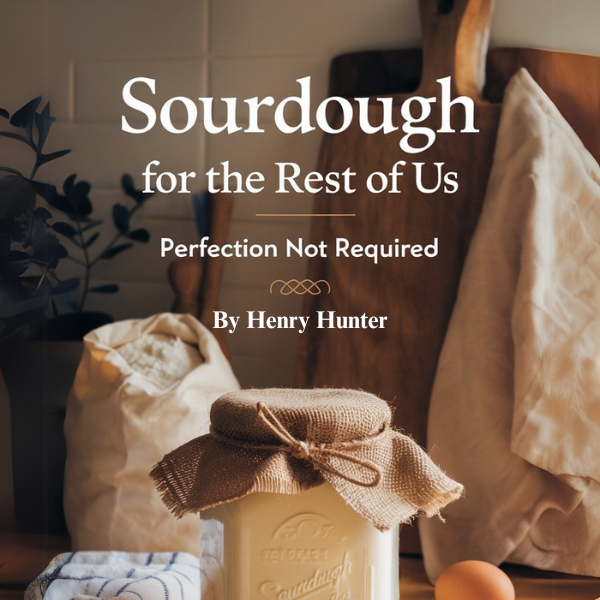
Sourdough for the Rest of Us
Free beginner's guide to sourdough