 Baking Great Bread at Home
Soft, Puffy Pockets Every Single Time
BeginnerFoolproof PitaBread
by Henry Hunter Jr.
The secret to perfect pitas: heat, thickness, and moisture
Fermentation
1½ hours
Bake Time
2-3 min each
Yield
8 pita breads (6-7 inches each)

Perfection is not required
"Great bread isn't about perfect technique—it's about understanding the dough."— Henry Hunter Jr.
By Henry Hunter Jr., founder of Crust & Crumb Academy and Baking Great Bread at Home.
Authentic Flavor
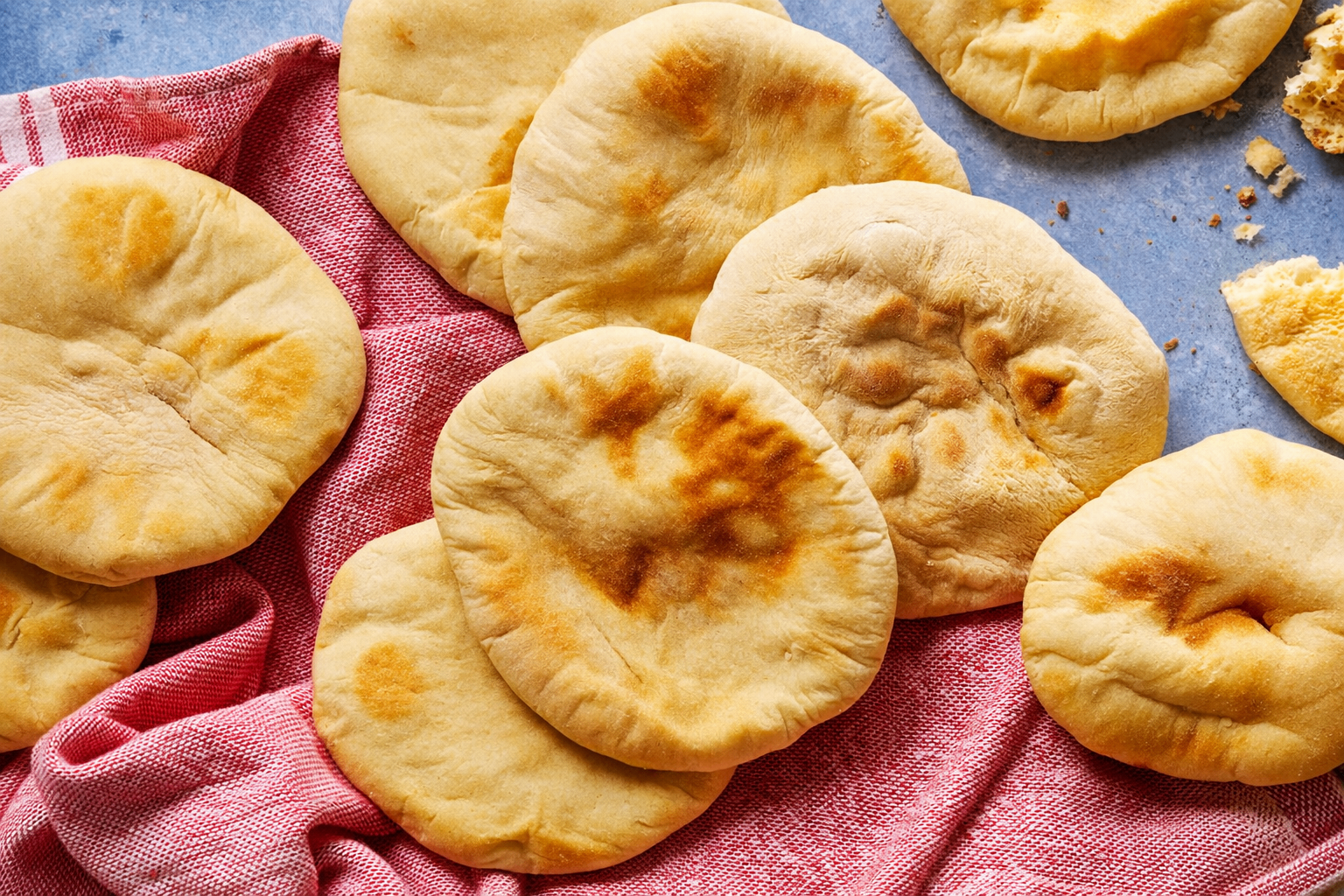
Most pita recipes fail because they don't explain why pitas puff. The pocket forms when moisture in the dough turns to steam in a blazing hot oven. That steam rapidly expands, pushing the top and bottom layers apart. For this to work, you need three things: enough moisture in the dough, intense heat, and even thickness.
Equipment Needed
Ingredients
Dough
A simple, straightforward dough that comes together in minutes
plus more for dusting
or 1¼ tsp active dry
105-110°F (40-43°C)
Pro Tip
Substitute up to ⅓ of the flour with whole wheat for a nuttier flavor. Using more than that may result in denser pitas.
Mixing
Make the Dough
About 10 minutes active time
This is a simple dough that comes together quickly. The key is keeping the dough slightly tacky—a sticky dough produces more steam for better puffing.
Click each step to mark complete
Combine Dry Ingredients
In a large bowl, whisk together the flour, , salt, and sugar until evenly distributed.
Add Wet Ingredients
Pour in the warm water and olive oil. Stir with a wooden spoon or dough whisk until a shaggy dough forms with no dry flour visible.
Knead the Dough
Turn out onto a clean surface and for 5-7 minutes until smooth and slightly tacky. The dough should bounce back when poked. Resist adding extra flour—a slightly sticky dough creates more steam for puffing.
First Rise
Place dough in a lightly oiled bowl, cover with plastic wrap or a damp towel, and let rise until doubled, about 1 to 1½ hours.
⏱ Wait Time
Let the dough double in size
Pro Tip
Watch the dough, not the clock. Your kitchen temperature affects rise time. The dough is ready when it's doubled and passes the .
Precise Timers
Use these interactive timers to track your stages.
Knead Dough
First Rise
Shaping
Shaping
Form tight balls and roll to even thickness for consistent puffing.
Classic Round Pitas
The traditional shape. Roll to 6-7 inches for perfect pockets.
RecommendedClick each step to mark complete
Divide the Dough
Gently deflate the dough and divide into 8 equal pieces (about 65g each).
Form Tight Balls
Roll each piece into a tight, smooth ball by cupping your hand and rotating the dough against the counter.
Rest
Cover with a towel and let rest 15-20 minutes to relax the .
Roll Evenly
Roll each ball into a circle about 6-7 inches (15-18cm) in diameter and ¼ inch (6mm) thick.
Proof Test: After rolling, the pitas should look smooth and spring back slightly when touched. If they shrink back aggressively when rolling, let them rest a few more minutes.
The Final Step
Baking
The magic happens in a blazing hot oven. The intense heat turns moisture into steam, creating the signature pocket.
Baking Methods
A screaming hot or inverted baking sheet gives the best, most consistent puff.
Equipment: Baking stone or heavy baking sheet
Preheat Aggressively
Place a or heavy baking sheet (flipped upside down) on the middle rack. Preheat to 475-500°F (245-260°C) for at least 30 minutes. The surface must be screaming hot.
Bake Quickly
Carefully place 1-2 pitas directly on the hot surface. Bake for 2-3 minutes. Watch for the puff—they should balloon up like magic. Flip and bake another 1 minute until lightly golden.
Keep Them Soft
Immediately transfer to a clean towel and wrap loosely. The trapped steam keeps them soft and pliable. Continue with remaining pitas.
"Don't open the oven door! Every time you peek, the temperature drops significantly. Turn on the oven light and watch through the window instead."
Nutrition Facts
Per 1 pita • servings per recipe
* Values are estimates based on standard ingredients
Storage
Room Temperature
Store in an airtight bag for 2-3 days.
Frozen
Stack with parchment between layers, seal in a freezer bag, and freeze for up to 3 months.
Your Feedback
Rate This Recipe
Loading ratings...
Troubleshooting
Baker's Notes
Common questions and solutions for perfect results
If you're serious about scoring, you need the right blade in your hand. Wire Monkey makes handcrafted bread lames from black walnut — built to last, balanced in the hand, and sharp enough to glide through cold dough cleanly every single time. No dragging, no hesitation marks. Just a clean cut.
Wire Monkey Handcrafted Bread Lames
You Might Also Enjoy
More recipes from our pantry that pair well with this bake.


Get More Recipes in Your Inbox
Join thousands of home bakers receiving weekly recipes, tips, and techniques to elevate your bread game.
No spam, ever. Unsubscribe anytime.
More from Baking Great Bread at Home
Tools, resources, and community to help you bake better bread

Crust & Crumb Academy
Go deeper into your craft. FREE courses, challenges, and real feedback. No gatekeeping. Perfection is not required.
Sourdough Starter Companion
Your AI-powered starter assistant. Track feedings, troubleshoot issues, and keep your starter thriving.

BakingGreatBread.com
Real bread for the rest of us

Baking Great Bread Blog
Recipes, tips, and stories from the bread journey
Recipe Converter
Convert sourdough recipes to yeast and back again
Crust & Crumb App
Your AI-powered baking assistant

Facebook Community
Join 50,000+ bakers sharing, learning, and supporting each other

Sourdough for the Rest of Us
Free beginner's guide to sourdough